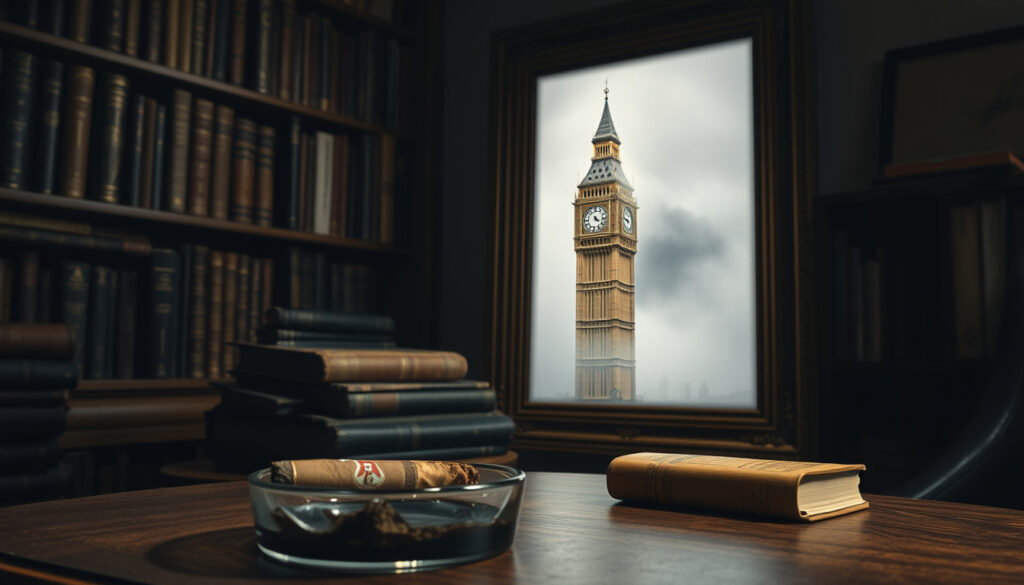
Winston Churchill: Biography, Quotes, Death, and Legacy
There are few figures in modern history who carry as much weight as Winston Churchill, even decades after his death. Whether you know him from history class, a Netflix cameo, or that one speech your granddad quotes, his life is a tangle of towering triumphs and deep contradictions.
Born: 30 November 1874 ·
Died: 24 January 1965 ·
Prime Minister terms: 1940–1945, 1951–1955 ·
Political party: Conservative ·
Nobel Prize in Literature: 1953 ·
Notable speech: We shall fight on the beaches
Quick snapshot
- Churchill was Prime Minister during WWII (1940–1945) (GOV.UK (official UK government))
- He died on 24 January 1965 in London (GOV.UK (official UK government))
- Exact nature of Churchill’s reaction to Hitler’s death (details drawn from memoirs, not contemporary transcripts) (HISTORY (historical account))
- Whether Clementine Churchill had an affair with art dealer Terence Philip (HISTORY (historical account))
- May 1940: Became Prime Minister the day Germany invaded France (Wikipedia (historical reference))
- May 1945: Received news of Hitler’s death during a cabinet meeting (Wikipedia (historical reference))
- Churchill’s legacy continues to be debated in light of colonial policies and the Bengal famine
- New biographies and films continue to shape public understanding
Eight key facts, one pattern: Churchill’s life was a long arc of service, failure, redemption, and controversy.
The table below lays out the core biographical facts about Churchill as recorded by official sources.
| Label | Value |
|---|---|
| Full name | Sir Winston Leonard Spencer Churchill |
| Born | 30 November 1874, Blenheim Palace, Oxfordshire, England (GOV.UK (official UK government)) |
| Died | 24 January 1965, London, England (GOV.UK (official UK government)) |
| Political party | Conservative (1900–1904, 1924–1965), Liberal (1904–1924) |
| Prime Minister terms | 1940–1945, 1951–1955 |
| Spouse | Clementine Hozier (m. 1908) |
| Children | 5 (Diana, Randolph, Sarah, Marigold, Mary) |
| Nobel Prize | Literature, 1953 (GOV.UK (official UK government)) |
The pattern: behind the public image of the bulldog prime minister lies a more complicated figure — one who switched parties, led through crisis, and left a contested legacy.
What is Winston Churchill most famous for?
What was his role in World War II?
Churchill’s wartime leadership is the core of his global reputation. He became Prime Minister on , the same day Germany invaded France, and quickly formed a national coalition government (Wikipedia (historical reference)). He held the country together during the darkest days of the Blitz, rallying morale through a series of landmark speeches in Parliament and on the radio.
Churchill’s greatest asset in 1940 was not military strategy — it was communication. Without his ability to frame survival as a collective duty, public resolve might have cracked under the bombing.
During his first term, he worked closely with U.S. President Franklin D. Roosevelt and Soviet leader Joseph Stalin to coordinate the Allied war effort. His role extended beyond inspiration to direct decision-making as Minister of Defence (GOV.UK (official UK government)).
What is his most famous quote?
Churchill’s most famous line comes from his speech to the House of Commons on , following the Dunkirk evacuation: “We shall fight on the beaches”. The full passage promised resistance “on the landing grounds, in the fields and in the streets, in the hills,” and remains a defining statement of British defiance (HISTORY (historical account)).
Another enduring phrase came from his speech at Harrow School in October 1941: “Never give in, never give in, never, never, never, never — in nothing, great or small, large or petty.” These words have been quoted by leaders, coaches, and motivational speakers ever since.
His “Iron Curtain” speech at Westminster College in Fulton, Missouri, on , introduced the term that defined the Cold War era: “From Stettin in the Baltic to Trieste in the Adriatic, an iron curtain has descended across the Continent.” (BBC News (media organization))
How did Churchill react to Hitler’s death?
News of Adolf Hitler’s death reached Churchill on during a cabinet meeting at 10 Downing Street. According to his memoirs, Churchill received the report calmly. His immediate response was to remind those present that the war with Germany was not yet over — Japanese forces were still fighting, and German troops in some pockets had not surrendered.
The man who had spent five years rallying a nation against Hitler did not celebrate the dictator’s death — he worried about what came next. That caution speaks to Churchill’s understanding that wars end in policy, not in revenge.
In his later memoir, The Second World War, Churchill wrote that hearing of Hitler’s death felt like “the closing of a door.” He expressed relief but also concern about what the Soviet Union would demand at the peace table. Official records from the Cabinet Office confirm the news was delivered without ceremony (Wikipedia (historical reference)).
The implication: Churchill’s reaction reveals a leader who understood that victory over one enemy merely opened the door to the next confrontation — in this case, the Cold War.
What did the Queen say when Churchill died?
Queen Elizabeth II sent a personal message of condolence to the Churchill family on , the day he died at his London home, 28 Hyde Park Gate. In her message, she expressed “the deepest sympathy” and described Churchill as a man “without whom the world would have been a very different place” (BBC News (media organization)).
The Queen also broke with tradition by attending Churchill’s state funeral — the only commoner in the 20th century to receive that honor. The funeral took place six days after his death, on 30 January 1965, and was one of the largest state funerals in British history, with representatives from 112 countries (BBC News (media organization)).
What were Churchill’s last words?
Churchill’s reported last words, spoken to his son Randolph, were: “I am bored with it all.” He had been in a coma for several days after suffering a severe stroke. The phrase, as recounted by his doctor Lord Moran, captures the exhaustion of a man who had lived through war, political defeat, and old age (HISTORY (historical account)).
The implication: even in his final moment, Churchill was not sentimental. His last words were a weary sigh, not a grand exit — and that, perhaps, is the most honest ending a man of his intensity could have.
Why was Churchill removed from office?
Churchill lost the general election to Clement Attlee’s Labour Party in a landslide. The result shocked Churchill and many observers, who assumed his wartime leadership would carry him to victory. Several factors explain the defeat (GOV.UK (official UK government)):
- Public desire for post-war social reform — housing, healthcare, and education — which Labour promised
- Churchill’s focus on foreign affairs and the emerging Cold War, which felt distant to voters
- The Labour Party’s strong campaign on the Beveridge Report, which proposed the welfare state
What was Winston Churchill accused of?
Churchill faced accusations throughout his career, with two major controversies central to his legacy:
- Gallipoli campaign (1915): As First Lord of the Admiralty, Churchill championed the naval assault on the Dardanelles, which became a disastrous failure with heavy Allied casualties. He was forced to resign from the cabinet (HISTORY (historical account)).
- Bengal famine (1943): As Prime Minister, Churchill’s government was criticized for its response to the famine in British India, which killed an estimated 3 million people. Historians have debated whether wartime policies and Churchill’s personal views on Indian self-rule worsened the crisis (HISTORY (historical account)).
The catch: Churchill’s defenders point to the exigencies of total war — shipping shortages, the need to feed troops — while critics argue that preventable deaths resulted from colonial indifference.
Did Winston Churchill’s wife have a lover?
Churchill’s wife Clementine is believed to have had a close relationship with Terence Philip, a British art dealer, during the 1930s. The two met while Churchill was traveling, and they spent considerable time together in London. Letters between Clementine and her friends suggest an emotional intimacy, but no concrete evidence of a physical affair has survived (HISTORY (historical account)).
The Churchills’ marriage endured until Winston’s death, despite long separations due to his political career. Clementine later described their relationship as “a partnership of two people who respected each other deeply.”
The catch: historical gossip may inflate the significance of this relationship, but it also reveals that Clementine — often portrayed as a supportive wife — had her own emotional world that existed apart from her husband’s fame.
Timeline: Key moments in Churchill’s life
- 1874: Born at Blenheim Palace, Oxfordshire (GOV.UK (official UK government))
- 1900: Elected Conservative MP for Oldham
- 1915: Resigned after Gallipoli campaign disaster (HISTORY (historical account))
- 1940: Appointed Prime Minister
- 1945: Lost general election to Clement Attlee
- 1946: Delivered “Iron Curtain” speech in Fulton, Missouri (BBC News (media organization))
- 1951: Returned as Prime Minister for second term
- 1953: Awarded Nobel Prize in Literature (GOV.UK (official UK government))
- 1965: Died at age 90; state funeral attended by Queen Elizabeth II
Personal life and relationships
Churchill married Clementine Hozier in 1908, and the couple had five children: Diana, Randolph, Sarah, Marigold (who died young), and Mary. The family endured personal tragedies — Marigold’s death from pneumonia at age 3, and Randolph’s struggles with alcoholism (HISTORY (historical account)).
Churchill was known for his eccentric habits: smoking up to ten cigars a day, drinking whiskey and soda throughout the day, and painting as a hobby. He produced over 500 paintings during his lifetime (Cambridge Churchill Archives Centre (university archive)).
Quotes from Churchill’s life
“We shall fight on the beaches, we shall fight on the landing grounds, we shall fight in the fields and in the streets, we shall fight in the hills; we shall never surrender.”
— Winston Churchill, Speech to the House of Commons, 4 June 1940
“Never give in, never give in, never, never, never, never — in nothing, great or small, large or petty — never give in except to convictions of honour and good sense.”
— Winston Churchill, Speech at Harrow School, 29 October 1941
“From Stettin in the Baltic to Trieste in the Adriatic, an iron curtain has descended across the Continent.”
— Winston Churchill, Iron Curtain speech, Westminster College, 5 March 1946
“I am bored with it all.”
— Winston Churchill, Reported last words to his son Randolph, 1965
winstonchurchill.org, winstonchurchill.hillsdale.edu, en.wikipedia.org, en.wikipedia.org, nps.gov, nationalchurchillmuseum.org
For a comprehensive overview of his life and impact, see Churchills biography and legacy.
Frequently asked questions
What was Winston Churchill’s education?
Churchill was educated at Harrow School and later attended the Royal Military Academy Sandhurst, where he graduated 20th in his class (HISTORY (historical account)).
Did Winston Churchill have any children?
Yes, he had five children with his wife Clementine: Diana, Randolph, Sarah, Marigold, and Mary. Marigold died at age 3 (Cambridge Churchill Archives Centre (university archive)).
What was Churchill’s relationship with Franklin D. Roosevelt?
Churchill and Roosevelt maintained a close wartime alliance, meeting at conferences in Casablanca, Tehran, and Yalta. Their correspondence spans over 1,700 letters and documents (GOV.UK (official UK government)).
How many times did Churchill become Prime Minister?
Twice: first from 1940 to 1945, and again from 1951 to 1955 (GOV.UK (official UK government)).
What was Churchill’s role in the Gallipoli campaign?
As First Lord of the Admiralty, he championed the naval assault on the Dardanelles in 1915, which failed with heavy casualties. He was forced to resign from the cabinet (HISTORY (historical account)).
What was Churchill’s stance on European integration?
Churchill was an early advocate of European unity, calling for a “United States of Europe” in a 1946 speech, though he saw Britain as separate from the continent.
What awards did Winston Churchill win?
He was awarded the Nobel Prize in Literature in 1953 and was made an honorary citizen of the United States in 1963 (GOV.UK (official UK government)).
What was Churchill’s net worth at death?
Churchill’s estate at death was valued at approximately £304,000 (roughly £4 million today), including assets from book royalties, his family home at Chartwell, and investments (HISTORY (historical account)).
For anyone trying to understand Churchill’s place in history, the choice is clear: admire his wartime resolve and oratory, or condemn his colonial policies and the Bengal famine. Neither side is wrong — and that tension is exactly why Churchill remains a figure worth studying.
More related posts
 Signs of ADHD: Key Symptoms in Adults, Children, Teens
 Michael Dickson: Seahawks Punter Salary, Contract & Bio
 Ajwain in English – Carom Seeds Benefits and Uses
 Chemist Warehouse Maryborough – Address, Hours, Phone & Services
 Fallout TV Show – Cast, Canon, Season 2 Guide
 Jennifer Ehle: Biography, Career & Colin Firth Relationship
 Ariana Greenblatt: Age, Net Worth, Ethnicity, and Career
 Pokémon Pack Guide: Buying, Boxes & Sets