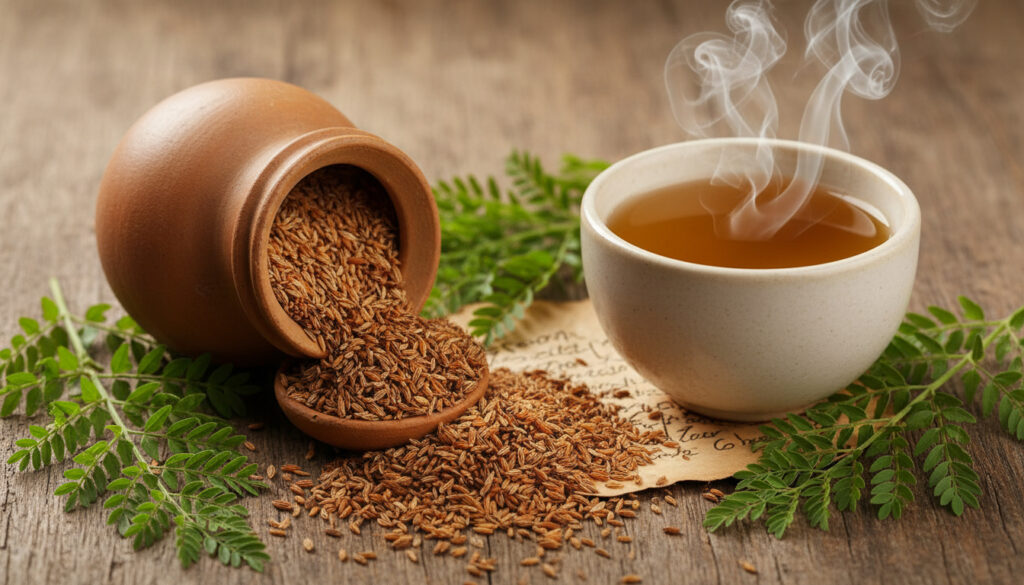
Ajwain in English – Carom Seeds Benefits and Uses
Ajwain, known in English as carom seeds, represents one of the most potent digestive spices in traditional medicine and modern cuisine. This small, striped seed from the Apiaceae family carries a sharp, oregano-like aroma powered by high concentrations of thymol, distinguishing it from similar-looking spices such as caraway or cumin.
Native to Egypt but cultivated extensively across India’s arid regions—particularly Rajasthan and Gujarat—Trachyspermum ammi serves dual roles as both culinary flavoring and Ayurvedic remedy. The seeds balance vata and kapha doshas while increasing pitta, making them particularly valuable for gastrointestinal complaints ranging from flatulence to atonic dyspepsia.
Despite frequent confusion with caraway or celery seeds, ajwain maintains distinct botanical and chemical properties. Its fruits, technically cremocarps measuring roughly 2mm by 1.7mm, split into two compressed mericarps containing the essential oils that deliver its characteristic pungency and therapeutic effects.
What Is Ajwain Called in English?
The term “ajwain” translates directly to carom seeds in English, though sources also list bishop’s weed and ajowan caraway as variant names. According to WebMD, these names all refer to the same plant species harvested primarily for its aromatic fruits.
- Ajwain and carom seeds are identical terms referring to Trachyspermum ammi.
- The seeds contain thymol, the same compound found in oregano and thyme, explaining the similar aroma.
- Despite visual similarity to caraway, ajwain belongs to a different genus and possesses stronger medicinal properties.
- Cultivation concentrates in semi-arid, salt-rich soils of western India and eastern Iran.
- Traditional use spans digestive stimulant, carminative, and antispasmodic applications.
- The plant produces small white flowers in umbels characteristic of the Apiaceae family.
- Seeds serve as both culinary spice and galactagogue in traditional medicine systems.
| Attribute | Details |
|---|---|
| Scientific Classification | Trachyspermum ammi (Apiaceae family) |
| Common English Names | Carom seeds, Bishop’s weed, Ajowan caraway |
| Native Origin | Egypt |
| Primary Cultivation Regions | India (Rajasthan, Gujarat), Iran, Pakistan, Afghanistan |
| Plant Height | 60-90 cm |
| Fruit Structure | Cremocarp splitting into two mericarps (2mm × 1.7mm) |
| Essential Oil Content | 2-4.4% of seed weight |
| Dominant Active Compound | Thymol (approximately 50% of essential oil composition) |
| Sensory Profile | Bitter, pungent, with anise-oregano notes |
| Ayurvedic Properties | Balances vata and kapha; increases pitta |
Health Benefits of Ajwain (Carom Seeds)
Traditional medical systems have utilized ajwain for millennia to address digestive and respiratory conditions. Modern phytochemical analysis confirms the presence of thymol, p-cymene, γ-terpinene, and carvacrol, which contribute to its antimicrobial and antispasmodic properties.
Digestive and Gastrointestinal Effects
Research published in PMC identifies ajwain as a stimulant, antispasmodic, and carminative. The seeds demonstrate efficacy against flatulence, atonic dyspepsia, diarrhea, and abdominal pain. The high thymol content relaxes gastrointestinal tract muscles while the saponin and tannin fractions provide antimicrobial action against intestinal pathogens.
In Ayurvedic practice, practitioners prescribe ajwain for piles, lack of appetite, and gastro-intestinal infections. The seeds’ ability to increase gastric acid secretion explains their role in treating sluggish digestion associated with kapha and vata imbalances.
Traditional texts classify ajwain as balancing vata and kapha while increasing pitta. This warming property makes it suitable for cold, sluggish digestive conditions but potentially aggravating for inflammatory gastric disorders.
Respiratory and Additional Applications
Beyond digestion, traditional use extends to bronchial issues and asthma management. The same volatile oils that aid digestion act as bronchodilators and expectorants. The seeds demonstrate anti-aggregatory properties affecting platelet function, while root extracts serve as diuretics.
Traditional practitioners also employ ajwain as an aphrodisiac and galactagogue for nursing mothers. However, clinical trials supporting these specific applications remain limited in current literature.
While traditional use includes galactagogue properties to promote milk production, specific safety data for pregnancy remains absent from current sources. The potent thymol concentration warrants consultation with qualified practitioners before use during pregnancy or lactation.
Sources do not establish explicit toxicity thresholds, though the concentrated essential oil content suggests consuming no more than one teaspoon of whole seeds daily for general digestive support. Overconsumption may irritate mucous membranes due to thymol intensity.
How to Use Ajwain in Cooking and Remedies
Culinary application of ajwain centers on its ability to impart a robust, thyme-like flavor to legumes, breads, and vegetable dishes. Healthline notes that the seeds appear commonly in Indian tempering for dals and parathas, where brief heating in oil releases the aromatic compounds.
Cooking Techniques
Dry-roasting whole seeds intensifies the aroma before grinding or adding to dough. The spice pairs particularly well with starchy vegetables and rich legumes that benefit from carminative assistance. Unlike delicate herbs, ajwain withstands extended cooking, though prolonged heat gradually dissipates the volatile thymol.
Western applications remain limited but feasible; the aromatic principles complement baked dishes such as savory pastries or casseroles. For experimental cooks, incorporating ajwain into a Tuna Pasta Bake Recipe introduces an unexpected herbal complexity similar to oregano but with greater pungency.
Preparing Ajwain Water
Traditional digestive remedies often utilize ajwain water, prepared by boiling one teaspoon of seeds in 500ml water until reduced by half. Consumed warm after meals, this preparation delivers the carminative benefits without the fibrous texture of whole seeds. Some practitioners combine the water with black salt or ginger for enhanced digestive stimulation.
Ajwain vs. Caraway and Celery Seeds: Key Differences
Botanical confusion persists between these three Apiaceae spices. Botanical analysis confirms that while ajwain (Trachyspermum ammi) and caraway (Carum carvi) share similar striped appearances, they belong to different genera. Ajwain possesses significantly higher thymol content, creating a sharper, more medicinal flavor profile compared to caraway’s milder anise sweetness.
| Characteristic | Ajwain (Carom Seeds) | Caraway Seeds | Celery Seeds |
|---|---|---|---|
| Scientific Name | Trachyspermum ammi | Carum carvi | Apium graveolens |
| Dominant Flavor | Thymol, oregano-anise pungency | Mild anise, peppery | Bitter celery, vegetal |
| Essential Oil Profile | High thymol (50%) | Carvone dominant | Sedanolide, limonene |
| Primary Culinary Use | Indian spice blends, legumes | European breads, sauerkraut | Pickles, soups, salads |
| Medicinal Focus | Digestive stimulant, antispasmodic | Carminative, galactagogue | Diuretic, anti-inflammatory |
Historical Cultivation and Traditional Timeline
- Origin in Egyptian native habitat before recorded medical use.
- Integration into classical Ayurvedic texts under Sanskrit names including Yavani, Bhutika, and Deepyaka.
- Establishment of commercial cultivation in Rajasthan and Gujarat’s semi-arid zones during the medieval spice trade era.
- Identification of thymol as the primary active constituent through 19th-century phytochemical analysis.
- Modern pharmacological review confirming gastro-intestinal and bronchial applications (PMC, 2012).
- Current global distribution through spice markets and essential oil extraction industries.
Established Properties vs. Unverified Claims
| Established Information | Uncertain or Unverified |
|---|---|
| Botanical identity as Trachyspermum ammi | Direct causal mechanisms for weight loss (no clinical trials identified) |
| Thymol constitutes primary essential oil component | Comprehensive side effect profiles for long-term use |
| Traditional digestive and carminative applications | Safety protocols for first-trimester pregnancy |
| Antimicrobial and fungicidal properties | Standardized dosing for specific conditions |
| Cultivation requirements in semi-arid, saline soils | Drug interaction potential with modern pharmaceuticals |
Ajwain in Global Cuisine and Ayurvedic Medicine
Regional nomenclature reflects ajwain’s geographic distribution. Traditional sources document Hindi names including Ajwain and Jevain, while Marathi speakers use Onva, Kannada speakers use Oma or Omu, and Persian tradition employs Zenian. Sanskrit texts reference Yavani, Ajamodika, and Yamini, indicating ancient integration into South Asian materia medica. Ajwain, also known as carom seeds, is a spice with a rich history and diverse culinary and medicinal uses, and you can find out more about the best beef brisket recipe here.
The plant thrives specifically in salt-rich, semi-arid soils unsuitable for less hardy crops. India dominates global production, particularly Gujarat and Rajasthan, though Iran, Pakistan, Iraq, and Afghanistan maintain significant cultivation. This environmental specificity limits commercial growing regions while ensuring a concentrated supply chain from established agricultural zones.
In Ayurvedic practice, ajwain transcends mere digestive aid. Classical texts categorize it as Deepyaka (illuminating) for its ability to clarify digestive fire (agni). The whole plant, including roots and flowers, enters therapeutic preparations, though the seeds remain the primary commercial and medicinal product.
Scientific Sources and Traditional Authority
Contemporary understanding of ajwain derives from both classical Ayurvedic literature and modern phytochemical review. Research published in the Journal of Pharmacy Research and indexed by Planet Ayurveda confirms traditional gastro-intestinal applications while identifying the root’s diuretic properties and the seed’s anti-aggregatory effects.
“The fruits possess stimulant, antispasmodic, and carminative properties, useful in flatulence, atonic dyspepsia, and diarrhea. The root is diuretic, while seeds demonstrate aphrodisiac and antimicrobial activities.”
— Phytochemical Review, PMC 3358968
“Yavani [ajwain] balances vata and kapha dosha due to its pungent and bitter taste, while its hot potency increases pitta, making it suitable for cold digestive disorders.”
— Classical Ayurvedic Classification
Summary
Ajwain, or carom seeds, delivers concentrated digestive support through its high thymol content and complex volatile oil profile. While traditional medicine systems validate its use for gastrointestinal and respiratory complaints, modern consumers should approach weight loss claims and pregnancy use with appropriate caution due to limited clinical data. For those integrating this spice into wellness routines, Carom Seeds Benefits and Uses provides additional context for maximizing therapeutic potential while respecting safety parameters.
Frequently Asked Questions
What is the difference between ajwain and ajwain ke bij?
These terms refer to the same entity. “Ajwain” denotes the plant and its fruits, while “ajwain ke bij” specifically names the seeds. In common usage, both indicate the dried fruits used as spice and medicine.
Is ajwain safe during pregnancy?
Current sources lack specific pregnancy safety data. While traditional use includes promoting lactation, the potent thymol concentration suggests consulting qualified healthcare providers before use during gestation.
Can ajwain help with weight loss?
No direct clinical evidence supports weight loss claims. Indirect benefits may occur through improved digestion and reduced bloating, but metabolism or fat-burning effects remain unproven in human studies.
How does ajwain differ from caraway seeds?
Though visually similar, they belong to different genera. Ajwain contains high thymol levels creating sharp, oregano-like pungency, while caraway offers milder anise flavor with carvone as its dominant oil component.
What is the best way to store ajwain seeds?
Store whole seeds in airtight containers away from direct light and heat. Ground ajwain loses volatile oils rapidly; grinding small quantities as needed preserves the thymol content responsible for digestive benefits.
How much ajwain should one consume daily?
Traditional usage suggests one teaspoon of whole seeds daily, either chewed raw, added to food, or prepared as ajwain water. Exceeding this amount may cause gastrointestinal irritation due to concentrated essential oils.
More related posts
 All the Bright Places: Finch’s Mental Health & Ending Explained
 Pat Benatar: Husband, Biggest Hit, and Song She Won’t Sing
 Carlo Acutis: Life, Miracles & Canonization
 Milo Manheim: Age, Height, Relationship, and Career Facts
 Linda McCartney: Her Life, Death, and Legacy with Paul McCartney
 Devin Booker: NBA Career, Jenner Relationship & Doncic Rivalry
 Karen Carpenter: Cause of Death and Tragic Story
 BYD Cars Price – Latest Ex-Showroom Rates in India