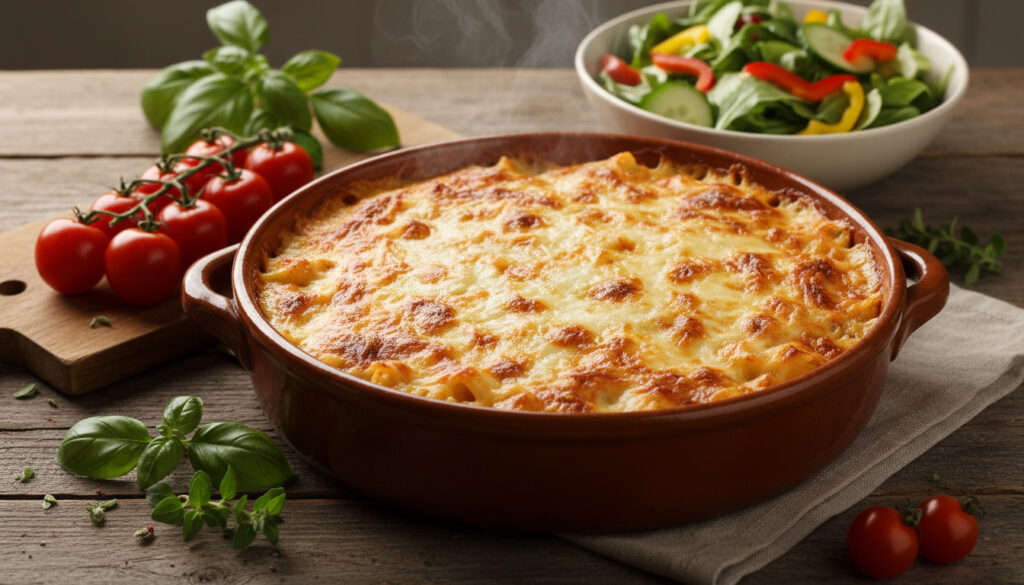
Tuna Pasta Bake – Quick Healthy Family Dinner Recipe
Tuna pasta bake represents the convergence of convenience and comfort in modern home cooking. This oven-baked casserole combines pantry staples—canned tuna, dried pasta, and tomatoes—into a protein-rich meal that satisfies both time-pressed parents and budget-conscious households. With adaptations ranging from creamy white bean sauces to low-carb vegetable bases, the dish accommodates diverse dietary needs while maintaining its core appeal as a one-pan dinner solution.
The recipe’s popularity across the United Kingdom stems from its structural flexibility. Cooks can assemble components in under twenty minutes, bake at a moderate temperature, and produce four to six servings suitable for immediate dining or future storage. Nutritional profiles vary by ingredient selection, yet most configurations deliver approximately 30 grams of protein per portion while keeping costs around £1 to £2 per serving.
How to Make Tuna Pasta Bake: Step-by-Step
Essential Preparation Insights
- Undercook pasta by two minutes to prevent mushiness during baking
- Reserve starchy pasta water to enhance sauce creaminess without added cream
- Drain tuna thoroughly but flake gently to maintain texture
- Select short pasta shapes like rigatoni or penne for optimal sauce retention
- Layer cheese on top rather than mixing throughout for a crispy golden crust
- Utilize frozen vegetables to reduce preparation time while maintaining nutritional value
- Preheat oven to 180°C (350°F) for consistent cooking results
Nutritional Breakdown Per Serving
| Nutrient | Per Serving | % Daily Value* |
|---|---|---|
| Calories | 468 kcal | 23% |
| Protein | 34g | 68% |
| Carbohydrates | 70g | 25% |
| Fat | 7g | 10% |
| Saturated Fat | 3g | 15% |
| Fiber | 5g | 18% |
| Sodium | 1076mg | 47% |
*Percent Daily Values based on 2,000 calorie diet
Standard preparations require 300–400 grams of dried short pasta shapes such as rigatoni, penne, or spirals. Protein content derives from 320–400 grams of canned tuna in brine or olive oil, thoroughly drained. The sauce base typically incorporates 500 grams of passata or 400 grams of chopped tomatoes, though Super Golden Bakes suggests blending reduced-fat cream cheese for richness.
Frozen vegetables—including 200 grams of corn, three-quarters cup of peas, or mixed blends of broccoli and carrots—integrate seamlessly without thawing. Reduced-fat cheddar or mozzarella, approximately 100–200 grams, creates the characteristic golden topping. Aromatics such as garlic powder, onion powder, and mustard season the mixture, with a crumbled stock cube enhancing umami depth.
Execution begins with boiling pasta in salted stock-water two minutes under package directions. Reserve 80 milliliters of pasta water before draining. Combine parboiled pasta, flaked tuna, vegetables, and sauce base in a greased baking dish. Distribute half the cheese throughout, topping with the remainder. Bake at 180°C for 20 to 40 minutes until the cheese bubbles and edges crisp.
Is Tuna Pasta Bake Healthy and Nutritious?
The health profile of this casserole depends largely on ingredient selection and portion sizing. A standard tomato-based preparation contains approximately 468 calories per serving, delivering 34 grams of high-quality protein primarily from canned tuna. This protein content satisfies roughly 68 percent of daily recommended intake for the average adult, supporting muscle maintenance and satiety.
Canned tuna provides 30 to 34 grams of protein per serving in most bake configurations. Selecting tuna packed in brine rather than oil reduces overall fat content without compromising protein density. For additional protein enhancement, Greek yogurt can be incorporated into the sauce base.
Caloric Content and Macronutrient Balance
Comparative analysis reveals variation across recipe styles. Creamy versions utilizing white bean purees average 481 calories per serving, according to Nourish Everyday. Diet-specific adaptations can reduce caloric intake to 251 calories per serving through strategic substitutions such as vegetable noodles in place of wheat pasta. Carbohydrate content ranges from 47 to 70 grams depending on pasta selection, with gluten-free chickpea alternatives offering moderate reductions.
Child-Friendly Nutritional Benefits
For families, the dish offers significant advantages in childhood nutrition. The mild flavor profile accommodates developing palates, while the incorporation of frozen vegetables introduces essential vitamins A and C. Walder Wellness formulations emphasize that the cheesy topping provides calcium, though reduced-fat varieties help control saturated fat intake for pediatric dietary requirements.
Tuna Pasta Bake Variations and Storage Tips
Adaptability distinguishes this casserole from more rigid culinary preparations. Cooks can modify the base formula to accommodate lactose intolerance, gluten sensitivity, or low-carbohydrate dietary protocols while preserving the essential character of the dish.
Cream-Free and Dairy Alternatives
Eliminating heavy cream does not necessitate sacrificing texture. A blend of reduced-fat cream cheese with passata creates richness comparable to traditional béchamel. Alternatively, pureed white beans combined with semi-skimmed milk produce a velvety sauce that adds fiber. Skinny Spatula utilizes a flour-thickened milk roux with sautéed onions for those preferring classic techniques.
Gluten-free preparations substitute chickpea or brown rice pasta at a 1:1 ratio. Low-carb variations replace pasta entirely with zucchini noodles. Dairy-free versions omit cheese or utilize vegan alternatives, relying on nutritional yeast for umami depth.
Freezing and Meal Preparation Protocols
The casserole supports extensive meal planning applications. Slimming Eats confirms that unbaked assemblies or fully cooked portions remain viable in freezer storage for up to three months when sealed airtight. Thawing overnight in refrigeration followed by reheating at 180°C for 20 to 30 minutes restores optimal texture. Refrigerated leftovers maintain quality for three to four days according to Hummusapien; rehydration with milk prevents dryness during reheating.
What Is Tuna Pasta Bake?
At its core, this dish constitutes a baked casserole combining cooked pasta, flaked canned tuna, vegetable matter, and a binding sauce topped with melted cheese. The preparation emerged from mid-20th century Western European home economics traditions, emphasizing shelf-stable protein sources and economical feeding of multiple diners. Unlike stovetop preparations, baking creates textural contrast between creamy interior and crisped cheese exterior.
Overcooking pasta during initial boiling results in mushy final texture; aim for two minutes under package instructions. Failure to reserve pasta water eliminates a crucial thickening agent. Vigorous stirring breaks tuna into unappealing paste rather than maintaining discrete flakes. Incorporating all cheese into the mixture rather than reserving portion for topping prevents proper crust formation.
Contemporary interpretations vary by region. The Jamie Oliver style UK family version emphasizes pantry staples without elaborate seasoning. RecipeTin Eats highlights that gentle folding of tuna as the final step preserves the satisfying chunkiness characteristic of quality casseroles.
Step-by-Step Cooking Timeline
Executing this recipe efficiently requires timing coordination across multiple components. The following sequence optimizes workflow from pantry to table.
- 0–15 minutes: Preparation phase. Preheat oven to 180°C (350°F). Bring salted stock-water to boil. Chop any fresh vegetables if not using frozen alternatives. Drain canned tuna, reserving minimal liquid.
- 15–20 minutes: Pasta parboiling. Cook dried pasta two minutes less than package directions indicate. Simultaneously steam frozen vegetables briefly if required. Reserve 80ml pasta water before draining.
- 20–45 minutes: Assembly and baking. Combine pasta, tuna, vegetables, and sauce base in oven-safe dish. Top with cheese. Bake until golden and crusty, approximately 20 to 40 minutes depending on dish depth.
Total elapsed time ranges from 45 to 50 minutes, with hands-on engagement limited to roughly half that duration.
Recipe Variations and Common Mistakes to Avoid
Distinguishing between established technique and flexible customization helps cooks adapt the recipe successfully without compromising structural integrity.
| Established Standards | Adaptable Variations |
|---|---|
| Oven temperature of 180°C (350°F) for even cooking | Sauce bases: tomato passata, white bean puree, or milk roux |
| Undercooking pasta by 2 minutes to prevent mush | Protein additions: extra tuna or Greek yogurt |
| Reserving starchy pasta water for sauce binding | Vegetable selections: corn, peas, spinach, broccoli, or carrots |
| Gentle flaking of drained tuna to preserve texture | Pasta alternatives: chickpea pasta, zucchini noodles, cauliflower rice |
| Cheese reserved primarily for topping | Seasoning profiles: garlic powder, mustard, chili flakes, or basil |
Critical errors typically involve overcooking pasta during boiling, breaking tuna into paste through aggressive mixing, or skipping the pasta water reservation that provides natural thickening. These mistakes result in soggy, dry, or improperly bound casseroles regardless of ingredient quality.
Why Tuna Pasta Bake Is a Family Favorite
Economic factors significantly drive the dish’s popularity in domestic kitchens. Cost analyses indicate approximately £1 to £2 per serving when utilizing basic pantry items, positioning the meal as significantly more economical than protein-equivalent meat dishes. This affordability does not require nutritional sacrifice; the combination of tuna and pasta delivers complete amino acid profiles alongside complex carbohydrates.
The recipe’s architecture supports diverse household schedules. Parents can prepare components during weekend meal prep sessions, freezing unbaked portions for deployment on demanding weeknights. The mild, cheesy flavor profile encounters minimal resistance from children, while adults can customize individual portions with hot sauce or additional seasoning post-baking.
Similar to how audiences appreciate comprehensive collections like Chris Hemsworth Movies – Complete Filmography Ranked for their thoroughness, families value this recipe for its reliability and completeness as a standalone meal requiring no elaborate side dishes.
Expert Tips and Sources
Culinary specialists emphasize the importance of sauce consistency and protein handling. Professional recommendations consistently highlight the reserved pasta water technique as crucial for achieving creaminess without heavy dairy.
Creamy textures in healthy pasta bakes rely on starch emulsification rather than fat content. The pasta water, combined with reduced-fat cream cheese or blended white beans, creates mouthfeel indistinguishable from heavy cream sauces while significantly reducing caloric density.
— Super Golden Bakes and Nourish Everyday methodology
Maintaining distinct tuna texture requires folding the fish into the pasta mixture as the final step before topping with cheese. Over-stirring integrates the tuna too thoroughly, resulting in a homogeneous texture that lacks the satisfying chunkiness characteristic of quality pasta bakes.
— RecipeTin Eats technique guidelines
What’s Next: More Recipe Ideas
Mastering this casserole provides foundation skills applicable to numerous variations, from chicken and vegetable bakes to bean-centric vegetarian alternatives. The techniques of parboiling pasta, creating reduced-fat cream sauces, and optimizing freezer-friendly meals translate across culinary categories. For those interested in symbolic meanings and seasonal contexts beyond the kitchen, exploring September Birth Flower – Aster and Morning Glory Symbols offers insight into how traditions and natural elements intersect with daily life.
Frequently Asked Questions
What side dishes complement tuna pasta bake?
Simple green salads, garlic bread, or steamed green beans provide textural contrast without overwhelming the meal’s caloric profile. Light vinaigrettes balance the casserole’s richness.
Can fresh tuna replace canned varieties?
Fresh tuna steaks require pre-cooking before baking to ensure proper texture. However, canned tuna remains preferable for moisture content and traditional flavor profiles.
Why does my pasta bake become dry after baking?
Insufficient sauce quantity or excessive baking time typically causes dryness. Adding reserved pasta water or milk during reheating restores moisture.
Is this recipe suitable for pregnant individuals?
Canned tuna in moderate amounts generally fits within pregnancy dietary guidelines. Limit albacore/white tuna to six ounces weekly; light tuna allows for higher consumption.
Can I prepare this in a slow cooker instead?
Slow cooker methods risk mushy pasta texture. If attempting, add pasta during the final 30 minutes and monitor liquid levels carefully.
How can I increase the vegetable content significantly?
Incorporate riced cauliflower into the sauce base or layer thinly sliced zucchini between pasta layers. Spinach integrates seamlessly into hot pasta without pre-cooking.
More related posts
 Noel Fielding: His Wigs, Sobriety, Family & Career
 Kai Schreiber: Biography, Gender Identity & Family
 Giorgia Meloni: Biography, Politics, Personal Life & Facts
 Saoirse Ronan: Biography, Facts, Husband & Pronunciation
 Fitbit Sense 2 Review: Key Features, Issues & Future
 Hungry Jacks Careers – Jobs, Pay Rates, Benefits Guide
 Ricoh GR IV – Specs, Price, Release and GR III Comparison
 David Bowie: Cause of Death, Love, Phobia & Yellow Teeth