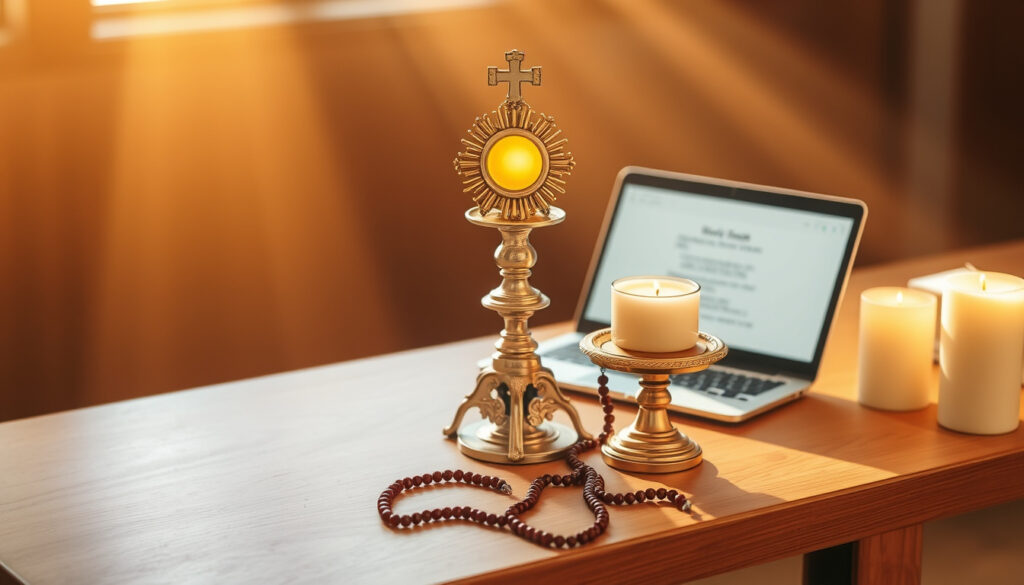
Carlo Acutis: Life, Miracles & Canonization
Carlo Acutis was a teenager who saw the world differently and decided to act on it, building a global online catalog of Eucharistic miracles before his death from leukemia at 15. This article traces his journey from London to becoming the Catholic Church’s first millennial saint, examining his milestones, miracles, and legacy.
Born: May 3, 1991 ·
Died: October 12, 2006 ·
Beatified: October 10, 2020 ·
Canonized: 2025 ·
Known For: Eucharistic devotion and digital media ·
Feast Day: October 12
Quick snapshot
- Born May 3, 1991 in London, England (Vatican News)
- Died of leukemia on October 12, 2006 in Monza, Italy (Britannica)
- Beatified on October 10, 2020 (Wikipedia)
- Canonized on September 7, 2025 (PBS NewsHour)
- Exact wording of his last words varies slightly across sources (Wikipedia)
- Details of the second miracle for canonization are not fully public (EWTN News)
- Official status as patron saint of the internet is not formally declared by the Church (Britannica)
- Exact date when Carlo began his website is not consistently documented (USCCB)
- The number of miracles on his website is often reported as over 150 but exact count varies (Britannica)
- Beatification date is based on Wikipedia, a tertiary source (Wikipedia)
- 1991: Born in London (Vatican News)
- 2002: Begins cataloguing Eucharistic miracles online (USCCB)
- 2006: Diagnosed with leukemia, dies October 12 (Vatican News)
- 2010: First miracle attributed to his intercession (Vatican News)
- 2020: Beatified in Assisi (Wikipedia)
- 2025: Canonized as first millennial saint (PBS NewsHour)
- Growing devotion worldwide, especially among youth (USCCB)
- Relics continue to be venerated in churches globally (USCCB)
- Potential for official designation as patron of the internet (USCCB)
Nine key facts, one pattern: Carlo Acutis’s life was short but packed with milestones that the Church carefully documented and verified.
| Label | Value |
|---|---|
| Full Name | Carlo Acutis |
| Born | May 3, 1991, London, England |
| Died | October 12, 2006, Monza, Italy |
| Nationality | Italian |
| Known For | Eucharistic devotion, creating online catalog of Eucharistic miracles |
| Beatified | October 10, 2020 |
| Canonized | 2025 |
| Feast Day | October 12 |
| Unofficial Patronage | Computers and the Internet |
Why did they make Carlo Acutis a saint?
The Catholic Church canonizes individuals who have lived lives of heroic virtue and for whom miracles have been confirmed through intercessory prayer. Carlo Acutis was recognized for his extraordinary devotion to the Eucharist and his use of technology to spread the faith. According to Vatican News, Pope Francis approved a first miracle attributed to Carlo’s intercession in 2020, paving the way for beatification. A second miracle, approved on May 23, 2024, led to his canonization.
What virtues did Carlo Acutis exemplify?
- Deep devotion to the Eucharist — he called it his “highway to heaven.”
- Use of digital media for evangelization, creating a website cataloging over 150 Eucharistic miracles in nearly 20 languages (Britannica).
- Joyful acceptance of suffering during his final illness, offering it for the Church and the Pope.
The pattern: Carlo lived a life of ordinary teenage interests but channeled them toward extraordinary spiritual goals.
How did the Church recognize Carlo’s sanctity?
The Church’s process involves declaring a candidate Venerable, then Beatification after one confirmed miracle, then Canonization after a second. Carlo was declared Venerable in 2018, beatified on October 10, 2020 in Assisi, and canonized on September 7, 2025 by Pope Leo XIV, together with Pier Giorgio Frassati (USCCB).
Why this matters: Carlo’s canonization makes him the first millennial saint, a powerful symbol for a generation navigating faith and digital life.
What did Carlo say before he died?
Carlo’s last words, as reported by his mother Antonia, are often cited as: “I’m happy to die because I’ve lived without wasting a minute of my life.” He also expressed forgiveness toward his mother for her initial anger at his diagnosis and offered his sufferings for the Church and the Pope. These words are recorded in multiple biographies.
What were Carlo Acutis’s last words?
The exact phrasing varies slightly, but the core message remains consistent: a peaceful acceptance of death and gratitude for a life fully lived. In an interview, his mother recalled that he told her, “Mum, don’t be afraid. I’m going to heaven.”
What is the significance of his last message?
Carlo’s last words embody a key theme of his spirituality: that every moment is a gift to be used for God and others. The USCCB has highlighted how his attitude toward death inspired many young people.
The trade-off: a short life, but one that left a lasting impression precisely because of how intentionally it was lived.
What was the miracle of Carlo Acutis?
Two miracles were officially recognized by the Vatican. The first, for beatification, involved the healing of a Brazilian boy suffering from a severe pancreatic disease in 2010 after prayers to Carlo. The second miracle, approved in 2024, involved the recovery of a Costa Rican woman, Valeria Valverde, after a serious bicycle accident that left her with a traumatic brain injury (EWTN News).
Miracle for beatification: healing of a Brazilian boy
In 2010, a young Brazilian boy with a life-threatening pancreatic disease was reportedly healed after his family prayed for Carlo’s intercession. The Vatican’s medical board found no scientific explanation, and the miracle was formally recognized in 2018 (Vatican News).
Miracle for canonization: approval of a second miracle
The second miracle, approved by Pope Francis on May 23, 2024, involved a young woman from Costa Rica who suffered a severe head injury in a bicycle accident. Her recovery was deemed medically inexplicable, and the Vatican’s consultation of theologians confirmed it as a miracle attributed to Carlo’s intercession (EWTN News).
The catch: the details of the second miracle remain partially undisclosed, but the Church’s recognition is a firm signal of divine intercession.
What caused Carlo Acutis’ death?
Carlo was diagnosed with acute promyelocytic leukemia in 2006. He underwent treatment but died on October 12, 2006, at age 15, in Monza, Italy. According to Vatican News, he accepted his suffering with patience and remained cheerful, continuing his activities until near the end.
What disease was Carlo diagnosed with?
Acute promyelocytic leukemia is a rare form of leukemia that affects the blood and bone marrow. It is treatable but aggressive; Carlo’s form was particularly severe, and he died within weeks of diagnosis.
How did Carlo face his illness?
Carlo reportedly told his parents, “I offer my sufferings for the Lord, for the Pope, and for the Church.” He also continued to work on his website and maintain his cheerful disposition. His mother recalled that he prepared a list of people to pray for and asked for a priest to hear his confession (Britannica).
What this means: Carlo’s death became a testimony to his faith — he didn’t just talk about offering suffering, he lived it.
Why was the tomb of Carlo Acutis opened?
In 2019, in preparation for his beatification, Carlo’s tomb was opened and his body exhumed from the cemetery in Assisi. The Church relocated his remains to the Sanctuary of Spoliation in Assisi for public veneration. His body was found in a natural state of preservation — not considered incorrupt — but a life-sized wax replica was created for display.
When was his tomb opened?
The exhumation took place in 2019, about a year before his beatification. The official announcement was made by the Diocese of Assisi and reported by Vatican News.
What was found when his tomb was opened?
The body was found partially intact and in a natural state of preservation. The Church decided to display a wax replica of his body, dressed in his typical jeans and sneakers, to help pilgrims connect with his youthful image. The actual remains were placed in a reliquary in the sanctuary.
The implication: the tomb opening was a logistical step for veneration, not a miraculous discovery, but it has drawn thousands of pilgrims to Assisi.
Carlo Acutis’s story is not just about a teenager who became a saint — it’s about showing that holiness is accessible to anyone, even in the digital age. For young Catholics navigating faith and technology, his example is a direct challenge: use your tools for something bigger than yourself.
Timeline of Carlo Acutis’s life and canonization
- May 3, 1991 — Born in London, England. (Vatican News)
- 1996 — Family moves to Italy.
- 2002 — Begins cataloguing Eucharistic miracles on a website. (USCCB)
- 2006 — Diagnosed with acute promyelocytic leukemia. (Vatican News)
- October 12, 2006 — Dies at age 15. (Britannica)
- 2010 — First miracle attributed to Carlo’s intercession. (Vatican News)
- 2018 — Declared Venerable; first miracle recognized.
- 2019 — Tomb opened and body exhumed for veneration. (Vatican News)
- October 10, 2020 — Beatified in Assisi. (Wikipedia)
- 2025 — Canonized as a saint. (PBS NewsHour)
What we know for sure — and what’s still open
Confirmed facts
- Carlo Acutis was born on May 3, 1991.
- He died of leukemia on October 12, 2006.
- He created a website cataloguing Eucharistic miracles.
- He was canonized in 2025.
- His tomb was opened in 2019.
What’s unclear
- The exact wording of his last words varies slightly across sources.
- Details of the second miracle for canonization are not fully public.
- His official patron designation is not formally declared by the Church.
- Exact date he began his website is not consistently documented.
- Number of miracles on his website varies by source.
- Beatification date relies on tertiary source.
Voices on Carlo Acutis
“We are all born originals, but many die as photocopies.”
— Carlo Acutis, from his website
“I’m happy to die because I’ve lived without wasting a minute of my life.”
— Carlo Acutis, as reported by his mother Antonia
“He used the internet to proclaim the Gospel.”
— Pope Francis, during the beatification homily
“Carlo forgave me when I reacted angrily to his cancer diagnosis. He was the one comforting me.”
— Antonia Acutis, mother of Carlo
Carlo Acutis’s life, though short, has already left a deep mark on the Church and the world. For young Catholics struggling to reconcile faith with digital life, his example is clear: use your talents for something eternal, or risk wasting the time you have. The choice is yours.
ewtnnews.com, youtube.com, en.wikipedia.org, ewtnnews.com, vaticannews.va, vaticannews.va
A detailed biography of Carlo Acutis is available in A detailed biography of Carlo Acutis, which covers his life, miracles, and canonization.
Frequently asked questions
Who is Carlo Acutis?
Carlo Acutis was a teenage Italian Catholic known for his Eucharistic devotion and computer skills. He was canonized in 2025, becoming the first millennial saint.
What is Carlo Acutis known for?
He is best known for creating an online catalog of Eucharistic miracles and for his joyful, devout life. He is often called the “patron saint of the internet”.
When was Carlo Acutis beatified?
He was beatified on October 10, 2020, in Assisi.
What is the Carlo Acutis website about?
The website, started when he was 11, documents over 150 Eucharistic miracles from around the world, with translations in nearly 20 languages.
Is Carlo Acutis the patron saint of the internet?
He is widely regarded as the unofficial patron saint of the internet and computers, though the Church has not formally declared this.
How did Carlo Acutis use technology in his faith?
He used his computer skills to create a website, share Eucharistic miracles, and inspire others to deepen their faith through digital media.
What is the feast day of Saint Carlo Acutis?
His feast day is celebrated on October 12, the anniversary of his death.
More related posts
 Becky Hill: Biggest Hit, Net Worth, Partner, and Sobriety Journey
 Kendric Davis: Career, Suspension, Contract, and Family
 Cheap Fuel Near Me: Lowest Prices in Ireland Today
 Pierce Brosnan Wife: Keely Shaye Smith & Cassandra Harris
 Lisa Millar Partner: Sid Maher, Dating History & Career
 Queen Elizabeth II: Biography, Last Words, and Legacy
 Jacqui Felgate: Age, Husband, Children, Career & Ratings
 Shirley MacLaine: Career, Family, and Nicholson Friendship