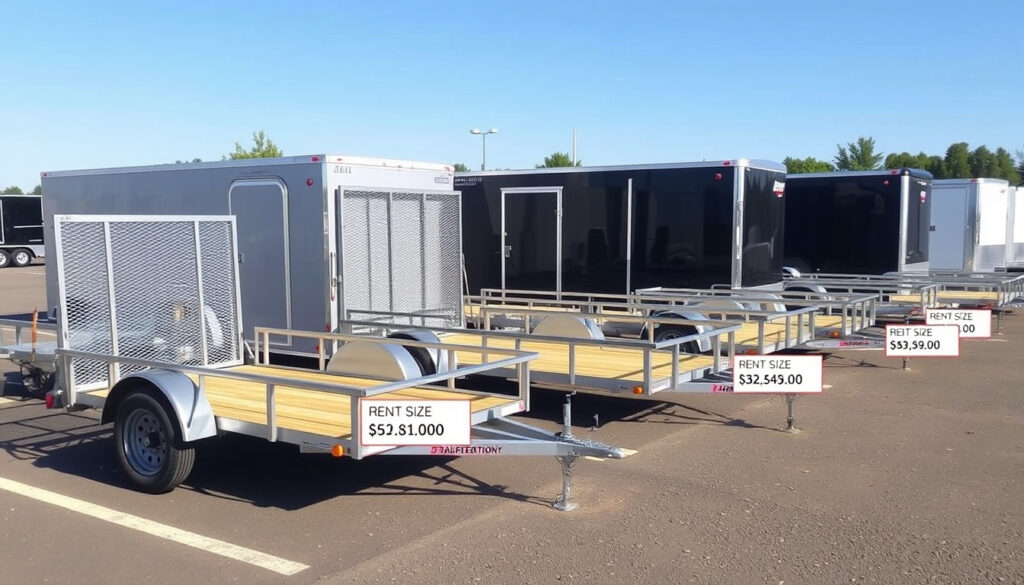
Move Yourself Trailer Hire: Sizes, Costs & Requirements Guide
Anyone who’s ever tried to move a couch, a mattress, or an entire apartment knows the feeling: you need a trailer, but the options are endless and the rules confusing. Move Yourself Trailer Hire, with its massive 950+ depot network, promises a straightforward solution for DIY movers across Australia.
Depots: 950+ ·
Typical rental: 24 hours ·
Available types: enclosed, open, flatbed, car, box ·
Booking: online and in-person
Quick snapshot
- Choose a trailer that matches your load size and vehicle capacity. (Move.org trailer guide)
- Common sizes: 5×8 (small), 6×12 (medium), 8×20 (large). (Move.org trailer guide)
- Overloading or using too large a trailer can be dangerous (Move.org trailer guide).
- Check your local license regulations before towing.
- In many places, a standard license covers trailers under a certain weight.
- Some situations require an additional towing endorsement.
- Prices vary by trailer size, duration, and company.
- Move Yourself offers competitive rates with online booking.
- Deposits and insurance add to total cost.
- Follow the 60/40 rule for load distribution.
- Ensure your vehicle’s towing capacity matches the trailer.
- Use weight distribution hitches for heavy loads.
Move Yourself Trailer Hire publishes five key facts worth knowing upfront.
| Fact | Detail |
|---|---|
| Company focus | Trailer and vehicle hire in Australia |
| Depot network | 950+ locations nationwide |
| Trailer types | Enclosed, open, flatbed, car, box, and more |
| Booking | Online and in-person at depots |
| Rental duration | Typically 24-hour rental; longer available |
What size trailer do you need for your move?
Five common trailer sizes, one key rule: match your load volume and vehicle capacity. A 6×12 cargo trailer handles a one-bedroom apartment, while a single mattress and box springs fit in a 4×7 utility trailer. Here’s the breakdown.
How to calculate the right trailer size for your home
- Measure your largest furniture items (sofa, bed frame, dining table).
- Add 20% for boxes and smaller items.
- Check your vehicle’s towing capacity in the owner’s manual.
The pattern: a 6×12 trailer (2,500 lbs capacity) fits most 1-2 bedroom moves, according to Move.org (Move.org trailer size guide). For studio apartments, a 5×8 cargo trailer (1,800 lbs) is often enough.
Trailer size guide: 5’x8′, 6’x12′, 8’x20′ and what fits
The table below matches interior dimensions to typical household loads and daily costs.
| Size | Weight Limit | Best For | Typical Daily Cost |
|---|---|---|---|
| 4×7 utility | 1,770 lbs | Mattress, boxes, small furniture | $15–$30 |
| 5×8 cargo | 1,800–1,890 lbs | Studio apartment | $20–$40 |
| 6×12 cargo | 2,500 lbs | 1-2 bedroom home, includes pianos | $30–$55 |
| 8×20 cargo | 3,500+ lbs | Large houses, multi-room moves | $60–$100 |
Four sizes, one trend: most moves fall into the 5×8 or 6×12 sweet spot. A 20ft trailer is generally too large for small moves and requires a heavy-duty towing vehicle.
Is a 20ft U-Haul too big for a one-bedroom apartment?
Yes. A 20ft trailer (roughly 8×20 interior) is designed for 3-4 room houses. For a one-bedroom, you’d be paying for empty space and struggling with a large trailer that’s harder to maneuver and park. Move Yourself doesn’t list a 20ft option in its standard lineup, which is consistent with its focus on practical sizes for Australian DIY moves.
The implication: don’t size up “just in case.” A 6×12 trailer gives you room to breathe without overcomplicating the tow.
For a typical Australian two-bedroom unit, a 6×12 enclosed trailer from Move Yourself offers enough space for furniture, boxes, and appliances without requiring a heavy-duty towing vehicle.
Do you need a license to drive a trailer?
Three countries, three different answers. The license you need depends on where you’re towing, and the trailer’s weight. Here’s the roadmap.
License requirements for towing a trailer in Ireland
- Trailers over 750kg require a category BE license (Citizens Information Ireland official guidance).
- Trailers under 750kg can be towed with a standard B license.
License requirements in Australia and the US
- In Australia, a standard car license allows towing up to 4.5t GVM with conditions (Austroads national licensing framework).
- In the US, license requirements vary by state; most allow trailers under 10,000 lbs GVWR with a standard license (DMV.org state-by-state license guide).
When you need a special endorsement or a separate trailer license
- If you passed your driving test after 1997 in the UK, you may need an additional test to tow a trailer over 750kg.
- Australia requires a heavy vehicle license for combinations over 4.5t.
- Some US states (like California) require non-commercial Class A for trailers over 10,000 lbs.
The pattern: for 95% of DIY movers renting a standard utility or cargo trailer, a standard license is enough. The gotcha? Always check your state or territory’s specific rules before hooking up.
If you hold a standard Australian car license, you can tow Move Yourself’s largest trailers without a special endorsement. But if you’re towing a car trailer with a vehicle over 4.5t GVM, you may need a light rigid or heavy vehicle license.
The implication: one quick check of your local licensing body can save you a refused rental or a fine.
What is the best trailer rental company?
Three major players, one key difference: Move Yourself dominates Australia with 950+ depots, U-Haul rules North America, and Kennards focuses on equipment hire. The right choice depends entirely on your location and move type.
Move Yourself vs U-Haul vs Kennards: key differences
The table below highlights how the three companies compare across depot coverage, trailer range, and rental policies.
| Feature | Move Yourself | U-Haul | Kennards |
|---|---|---|---|
| Depot network | 950+ locations (Australia) | 23,000+ (US/Canada) | 20+ (Australia) |
| Trailer types | Enclosed, open, flatbed, car, box, boat | Utility, cargo, car, motorcycle, boat, ATV | Small box, utility, car, tipper |
| One-way rentals | Yes (selected depots) | Yes (nationwide) | Local only |
| Online booking | Yes | Yes | Yes (but limited) |
| Price (smallest utility) | Competitive (not published) | $14.95/day (U-Haul official published rates) | Varies by depot |
| Age requirement | 21+ (typically) | 18+ (some states 21+) | 21+ |
| Unlimited mileage | Yes (in-town) | Yes (all rentals) (U-Haul official policy) | Yes (local) |
Best trailer rental company for long-distance moves
For interstate moves, U-Haul’s one-way network is the most extensive in the US. In Australia, Move Yourself offers one-way rentals at selected depots, which is a strong option if you’re moving between major cities. U-Pack also offers a no-tow alternative where you only pay for the space used (U-Pack one-way trailer guide).
Best trailer rental company for local moves
For local moves, availability matters most. Move Yourself’s 950+ Australian depots means there’s likely one near you. Kennards is great for short-duration equipment hire, but their trailers are smaller. Kennards doesn’t offer one-way rentals, so you must return to the same depot.
The trade-off: Move Yourself’s family-owned service and massive depot network make it the default for Australian DIY movers. U-Haul wins in North America, but for Australians, Move Yourself is the practical choice.
What do you need to hire a trailer?
Four things: a valid license, a credit card, a bond deposit, and a tow hitch that fits. Move Yourself requires proof of identification and a bond, which is standard across the industry.
Documents and identification required
- Valid driver’s license (full or provisional, depending on company).
- Proof of address (sometimes required).
- For Move Yourself: bond and identification (Move Yourself official website).
Deposit and payment methods
- Credit card is the standard; cash deposits are rarely accepted (Extra Space Storage moving guide).
- Debit cards may be restricted or require additional hold.
- Bond amounts vary by company and trailer size.
Insurance and damage waivers
- Personal auto insurance rarely covers rental trailers (Extra Space Storage insurance warning).
- Collision damage waiver costs $15–$28 per day.
- Move Yourself offers optional insurance at booking.
Why this matters: don’t assume your car insurance covers the trailer. A $15 daily damage waiver is cheaper than paying for a scratched panel out of pocket.
How to tow safely: the 60/40 rule and weight distribution
One rule: 60% of the load’s weight goes in the front half of the trailer. That keeps the tongue weight at 10-15% of total trailer weight, which is the sweet spot for stable towing (NHTSA towing safety guidance).
What is the 60/40 rule for trailers?
- 60% of the load weight in the front half, 40% in the rear half.
- Proper tongue weight is 10-15% of total trailer weight.
- Too little tongue weight causes sway; too much pushes the tow vehicle’s rear down.
How to load a trailer for safe towing
- Place heaviest items (appliances, furniture) over the trailer axle.
- Secure items with ratchet straps to prevent shifting.
- Balance side-to-side to avoid lopsided loading.
Preventing trailer sway: hitches and weight distribution bars
- Trailer sway is caused by improper weight distribution (60/40 violation) or excessive speed (Consumer Reports towing safety tips).
- Weight distribution hitches improve stability for heavy loads (over 2,000 lbs).
- Anti-sway bars can further reduce fishtailing.
The implication: a poorly loaded trailer is dangerous at highway speeds. Spend 10 minutes on loading strategy, not just speed.
Even with proper weight distribution, towing a 6×12 trailer at 100 km/h in crosswinds is risky. Reduce speed by 15-20% when towing a large enclosed trailer, especially in windy conditions.
The pattern: safe towing is 80% loading and 20% driving — get the first part right and the second part follows.
Confirmed facts and what remains unclear
Confirmed facts
- Move Yourself Trailer Hire operates over 950 depots across Australia (Move Yourself official site).
- The company offers enclosed, open, flatbed, car, box, and boat trailers.
- Booking is available online and in-person at depots.
- A bond and valid driver’s license are required.
- Standard utility trailer sizes (4×7, 5×8, 6×12) cost $15–$55 per day.
- U-Haul in-town rentals start at $14.95/day with unlimited miles (U-Haul official FAQ).
What’s unclear
- Exact pricing for each trailer type at Move Yourself depots (not published).
- Whether insurance is included or optional at Move Yourself.
- Specific license requirements for towing in all Australian states and territories.
- Move Yourself one-way rental availability at specific depots.
Quotes from Move Yourself Trailer Hire
“Hiring a trailer with Move Yourself Trailer Hire is as easy as hook, click, and go!”
— Move Yourself Trailer Hire (official website)
“Car won’t move? Grab a mate, hook up a trailer, and you’re sorted.”
— Move Yourself Trailer Hire social media team (official Facebook page)
Two quotes, one theme: Move Yourself pitches itself as the straightforward, matey option for Australian DIY moving. No fuss, just a trailer and a tow bar.
mygoodmovers.com, moveadvisor.com, stimovers.com, coastalmovingservices.com
For a detailed breakdown of sizes and requirements, check the Move Yourself trailer hire guide published by Australia Current.
Frequently asked questions
Can I rent a trailer for moving furniture from Move Yourself?
Yes. Move Yourself offers enclosed and open trailers suitable for moving furniture. For a one-bedroom apartment, a 6×12 cargo trailer is recommended.
Is insurance included in the trailer hire price?
Insurance is typically not included and is optional. Standard collision damage waiver costs $15–$28 per day. Check with your local Move Yourself depot for exact pricing.
Do I need a tow hitch and lights to rent a trailer?
Yes. You must have a compatible tow ball (typically 50mm in Australia) and working trailer lights. Move Yourself checks the connection before you leave.
What happens if I damage the trailer during rental?
You’re liable for damages. The bond deposit covers minor damage; major damage may be charged separately. Collision damage waiver reduces your out-of-pocket cost.
Can I extend my trailer rental beyond the initial period?
Yes, but contact your local depot in advance. Late returns may incur additional daily fees. Move Yourself typically charges by the 24-hour period.
Are there any age limits for renting a trailer?
Most trailer rental companies, including Move Yourself, require the renter to be 21 years or older. Some locations may accept 18+ with a valid license and credit card.
For Australian DIY movers, the choice is clear: Move Yourself Trailer Hire offers the depot density and family-owned service that makes it the practical default, provided you check your vehicle’s towing capacity and load the trailer properly — or you’ll be stuck with U-Haul’s smaller local network or Kennards’ limited trailer options.
Related reading
- Bike Rack Car Guide — hitch types and weight considerations for vehicle attachments
- How to Stop Car from Fogging Up — vehicle prep tips for winter driving with a trailer
More related posts
 Suncorp Internet Banking Login: How to Access Your Account
 Lisa Millar Partner: Sid Maher, Dating History & Career
 Tony Todd Cause of Death: Stomach Cancer at 69
 Arielle Kebbel: Biography, Relationships, and Career Updates
 Chris Judd: AFL Career, Net Worth, and Life After Football
 TP Holder: Placement, Installation, and Selection Tips
 Claudia Doumit: Age, Height, Relationship with Jack Quaid
 Air Fryer Salmon – Exact Time and Temperature Guide