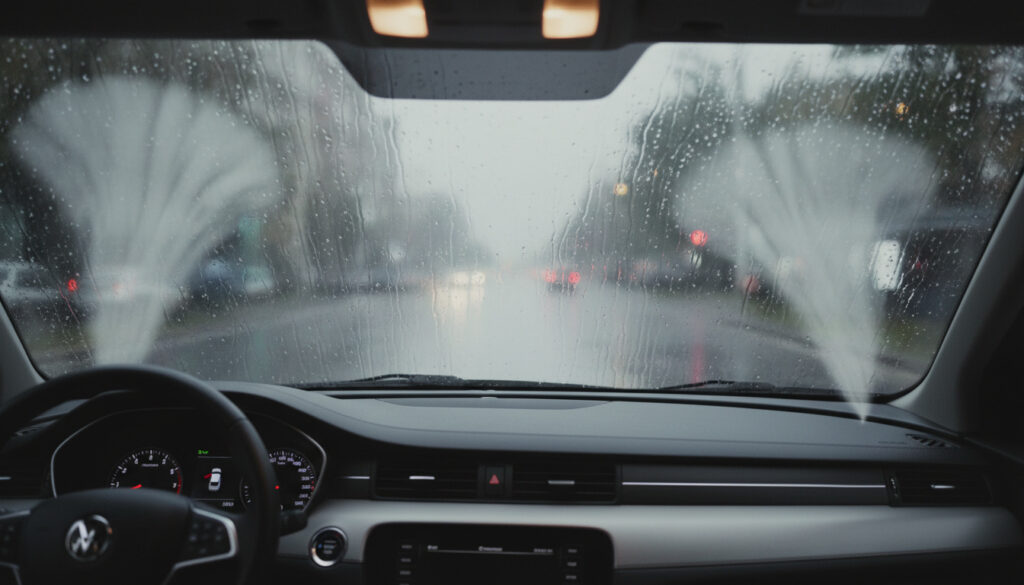
How to Stop Car from Fogging Up – Causes, Quick Fixes and Prevention
Fogged car windows create hazardous driving conditions within seconds of temperature shifts. Moisture condensation occurs when warm, humid interior air contacts cooler glass surfaces, triggering immediate visibility obstruction. Understanding the physical mechanisms behind this phenomenon enables drivers to implement rapid clearing techniques and effective long-term prevention strategies.
The physics of automotive fogging involves the dew point—the temperature at which air becomes saturated and water vapor condenses into liquid. Research from the University of Illinois confirms this occurs when warm, moist air meets cooler surfaces. Allstate’s automotive safety resources note that interior fogging typically develops in cold weather when passenger breath and damp clothing introduce moisture to chilled windshields, while exterior condensation forms in humid conditions when air conditioning cools glass below ambient dew points.
Multiple moisture sources contribute to interior humidity accumulation. Automotive service documentation identifies exhaled breath, snow or rain on clothing, open beverages, wet umbrellas, damp carpets from leaks, and even recently bathed pets as significant humidity generators within enclosed vehicle cabins.
Why Do Car Windows Fog Up?
Primary Cause
Temperature differential combined with interior humidity exceeding 60%
Immediate Solution
Air conditioning activation with fresh air intake (avoid recirculation)
Prevention Method
Eliminate moisture sources and maintain clean glass surfaces
Professional Tip
Silica gel desiccants absorb ambient moisture in parked vehicles
Critical Insights
- AC efficiency: Running the air conditioner resolves approximately 80% of fogging cases within 30-60 seconds by condensing moisture on cold coils
- Recirculation danger: Recirculate mode traps exhaled moisture and body heat, significantly worsening interior fog density
- Directional difference: Interior fogging stems from passenger-generated warmth contacting cold glass; exterior fogging occurs when humid outdoor air contacts AC-cooled windshields
- Surface condition: Clean glass resists condensation more effectively than contaminated surfaces with grease or dirt films
- Mechanical indicators: Persistent fogging despite full defrost operation suggests AC compressor malfunction or refrigerant depletion
- Heater core failures: Coolant leaks generate distinctive sweet, glycol-like odors and create greasy, persistent window films
- Economic comparison: DIY vinegar solutions provide comparable anti-fog performance to commercial sprays at significantly reduced cost
Fogging Facts Reference
| Fact Category | Technical Detail |
|---|---|
| Dew Point Threshold | Varies by relative humidity percentage |
| Ideal Cabin Humidity | Below 60% relative humidity |
| Standard Defog Time | 30-60 seconds with functional AC |
| Defrost Mode Function | Automatically engages AC compressor regardless of temperature setting |
| Primary Moisture Source | Passenger respiration and perspiration |
| Exterior Fog Trigger | AC-cooled glass below ambient dew point in humid weather |
| Recirculation Effect | Concentrates interior moisture levels |
| Ventilation Advantage | Expels humid air while introducing drier exterior air |
| Vinegar Solution Ratio | Equal parts distilled white vinegar and water |
| Desiccant Function | Silica gel absorbs 40% of weight in moisture |
| Heater Core Leak Indicator | Sweet odor with greasy window film |
| Carpet Moisture Migration | Trunk dampness vaporizes into cabin air |
How to Defog Car Windows Quickly
Air Conditioning Protocol
Physics research confirms that air conditioning provides the most effective defogging mechanism. AC systems dry air by condensing moisture onto cold evaporator coils as air passes through the unit. Honda service documentation emphasizes that this process functions effectively even during winter operation.
Modern vehicle defrost modes automatically engage the AC compressor regardless of temperature settings to dehumidify incoming air. Automotive repair demonstrations describe conditioned air as “extremely dry—like the Sahara Desert”—making it essential for rapid moisture elimination during humid or rainy conditions.
Engage the defrost mode immediately upon fog detection. This setting automatically activates the air conditioning compressor and directs airflow toward the windshield, creating optimal conditions for moisture removal even in cold ambient temperatures.
Ventilation Strategy
Selecting fresh air intake rather than recirculation mode proves critical for rapid clearing. University of Illinois research indicates that recirculation traps body heat and respiratory moisture, continuously increasing interior humidity levels. Fresh air ventilation allows moist interior air to escape while introducing drier exterior air, accelerating the defogging process.
Surface Preparation
Clean glass surfaces significantly improve defogging efficiency. Honda maintenance guidelines recommend vinegar-based cleaning solutions to eliminate microscopic contaminants that provide nucleation points for condensation. A 1:1 mixture of distilled white vinegar and water removes residue that contributes to persistent fogging.
System Diagnostics
Windows that continue fogging despite defrost operation at full heat indicate mechanical malfunction. Automotive repair forums identify non-functional AC compressors or low refrigerant levels as primary culprits in these persistent cases. Professional HVAC system inspection becomes necessary when standard defogging protocols fail.
Best Ways to Prevent Car Windows from Fogging Up
Moisture Source Elimination
Preventing fog requires eliminating humidity sources before driving. Vehicle maintenance communities recommend systematic inspection of window seals, sunroof drains, door vapor barriers, and heater cores for leaks. Removing wet umbrellas, raincoats, and towels from the cabin reduces ambient moisture. Checking trunk carpet dryness proves essential, as evaporating moisture migrates from enclosed storage areas into the passenger compartment.
Winter Storage Protocols
Vehicles stored in cold environments require specific preparation to prevent overnight fogging. Ensuring carpets remain completely dry before parking eliminates nocturnal humidity accumulation. Leaving windows slightly cracked in secure, covered parking facilitates air exchange, though this strategy presents security risks in public locations.
Humid Weather Management
High-humidity environments demand continuous AC operation to maintain clear glass. Drivers should avoid recirculation modes during rainy conditions, as exterior moisture combined with interior biological humidity quickly saturates recirculated air. Convenient fuel stops provide opportunities to address sudden fogging during extended highway travel in precipitation.
Mechanical Inspection
Toyota service documentation warns that persistent unexplained fogging may indicate heater core leakage. This mechanical failure produces distinctive sweet, maple-syrup-like odors and creates greasy, smudge-resistant films on interior glass surfaces. Immediate professional diagnosis prevents coolant loss and potential engine damage.
Effective Anti-Fog Products and DIY Solutions
Vinegar-Based Treatments
Homemade vinegar solutions provide effective, economical alternatives to commercial anti-fog sprays. Dealership maintenance guides confirm that vinegar cuts through residue that traps moisture on glass surfaces. Application involves wiping the solution across interior glass with lint-free cloths, followed by buffing to prevent streak formation.
Desiccant Systems
Silica gel packets and specialized automotive dehumidifiers absorb ambient moisture in parked vehicles. Cat litter poured into breathable fabric containers serves as an improvised desiccant, though effectiveness varies by humidity levels and container placement. These passive systems supplement active HVAC management but do not replace proper ventilation protocols.
Persistent fogging accompanied by sweet, glycol-like odors indicates a leaking heater core. This condition creates greasy window films and requires immediate mechanical inspection to prevent engine coolant loss and potential overheating damage.
Commercial Product Evaluation
Anti-fog sprays and wipes create temporary hydrophilic coatings that disperse condensation. Product longevity varies from several days to weeks depending on glass cleanliness and environmental conditions. Regular reapplication remains necessary for sustained effectiveness, particularly during seasonal transitions. For more information on how these products work, check out this guide on Vitamin C serum benefits.
If windows fog despite defrost mode operating at maximum heat, the AC compressor may be malfunctioning or refrigerant levels may be depleted. Professional HVAC service is required to restore dehumidification capabilities.
Step-by-Step Defogging Timeline
- Activate defrost mode with air conditioning engaged. Select fresh air intake rather than recirculation. Direct all vents toward the windshield.
- Adjust temperature to warm setting once initial moisture clears. Maintain AC operation to sustain low humidity levels. Open windows briefly if safety permits to exchange saturated air.
- Remove wet items from cabin. Inspect carpets for dampness. Check that sunroof drains and door seals remain unobstructed. Strategic route planning allows stops to address persistent moisture issues.
- Execute extended highway driving with heater activated to evaporate deep-seated moisture from upholstery and carpets. Schedule HVAC system inspection if fogging persists despite proper technique.
Established Facts vs. Common Misconceptions
| Verified Information | Misleading or Uncertain Claims |
|---|---|
| Defrost mode temporarily increases visible condensation before the windshield temperature rises above the dew point and clears | Defrost mode permanently worsens fogging by blowing additional air across the glass surface |
| Air conditioned air possesses extremely low humidity levels (“like the Sahara Desert”), making AC essential for defogging in humid conditions | Cracking windows always provides safe, effective fog prevention regardless of weather or security conditions |
| Recirculation mode concentrates interior moisture from respiration and perspiration, significantly delaying defogging times | Toothpaste or shaving cream applications provide permanent anti-fog protection without reapplication |
| Heater core leaks generate persistent fog accompanied by sweet odors and greasy glass films requiring mechanical repair | Cat litter or rice-filled socks permanently eliminate fogging without addressing underlying humidity sources |
The Science Behind Automotive Condensation
Automotive fogging represents a straightforward physical process governed by dew point thermodynamics. When warm air containing water vapor contacts surfaces cooled below the saturation temperature, molecules transition from gaseous to liquid states. Windshields provide ideal condensation surfaces during cold weather because glass conducts heat rapidly, chilling below the interior air’s dew point within minutes of exposure.
The reverse phenomenon occurs during humid summer conditions. Air conditioning systems cool windshield glass below the exterior ambient dew point, causing atmospheric moisture to condense on the outer surface. This explains why drivers encounter fogging immediately after starting vehicles on humid mornings—the AC unit chills the glass before the cabin cools sufficiently to lower interior humidity levels.
Surface chemistry further influences condensation behavior. Clean glass presents fewer nucleation sites for water droplet formation, allowing moisture to sheet rather than bead. Contaminated surfaces with organic residue or cleaning film provide microscopic anchors that hold droplets in place, creating the scattered-light scattering that drivers perceive as “fog.”
Expert Perspectives on Window Fogging
“Car windows fog when warm, moist air meets a cooler surface, causing water vapor to condense at the dew point temperature. This condensation can occur on either the inside or outside of windows depending on conditions.”
— University of Illinois Physics Department
“If your windows fog up even with defrost on full heat, your AC compressor may not be working properly or you could be low on refrigerant. The air conditioned air is extremely dry—like the Sahara Desert—which is why AC is essential for defogging.”
— Automotive Technical Analysis
“Check for leaks in window seals, sunroof drains, door vapor barriers, or the heater core. Removing damp items from your vehicle and ensuring carpets are dry—including the trunk—prevents moisture vapor from entering the cabin.”
— CarTalk Community Technical Discussion
Key Takeaways for Clear Windows
Maintaining clear automotive glass requires understanding the dew point physics that drive condensation, utilizing air conditioning systems that create desert-dry air for rapid moisture elimination, and eliminating humidity sources ranging from wet clothing to mechanical coolant leaks. While vinegar solutions and desiccant packets provide supplementary support, functional HVAC systems with fresh air intake remain the primary defense against dangerous visibility obstruction. Regular inspection of door seals, carpet dryness, and refrigerant levels ensures reliable performance across seasonal transitions.
Common Questions
Why does my car fog up so fast?
Rapid fogging indicates high interior humidity combined with significant temperature differentials. Multiple passengers, wet clothing, or recirculated air accelerate moisture accumulation. Check for heater core leaks if fogging persists despite proper ventilation.
Permanent solutions for foggy car windows?
No permanent coating eliminates fogging indefinitely. Effective long-term management requires maintaining functional AC systems, sealing window and door leaks, and keeping interior humidity below 60% through ventilation and desiccant use.
DIY anti-fog tricks for cars?
Mix equal parts vinegar and water to clean glass, eliminating residue that traps moisture. Place silica gel packets or cat litter in breathable containers under seats to absorb ambient humidity. Shaving cream provides temporary coating lasting several days.
What is the best way to prevent car fogging?
Activate air conditioning with fresh air intake immediately upon starting the vehicle. Remove wet items from the cabin before driving. Inspect and repair window seals, sunroof drains, and door vapor barriers to eliminate external moisture intrusion.
How do I stop my car windows from fogging up overnight?
Ensure carpets and upholstery remain completely dry before parking. Place silica gel desiccants inside the vehicle. Avoid recirculation mode during final driving minutes. In secure storage, slightly crack windows to facilitate air exchange and prevent moisture accumulation.
What causes fog inside car windows?
Interior fog results from warm, moist air contacting glass surfaces cooled below the dew point by exterior temperatures. Sources include passenger respiration, wet clothing, open beverages, damp carpets, and heater core leaks producing coolant vapor.
More related posts
 Double Bed Size vs Queen Ireland: Dimensions & Guide
 EVC Throttle Controller: Is It Worth Buying
 Marion Cotillard: Biography, Movies, Relationship, and News
 Karl Lagerfeld: Luxury Brand Status, Life, Legacy & More
 Best Free APA Referencing Generator: Compare Top 5 Tools
 Jack Skellington: The Pumpkin King of Halloween Town Explained
 Katee Sackhoff: Biography, Net Worth, Relationships
 Maria Callas: Life, Love, and Legacy of a Soprano