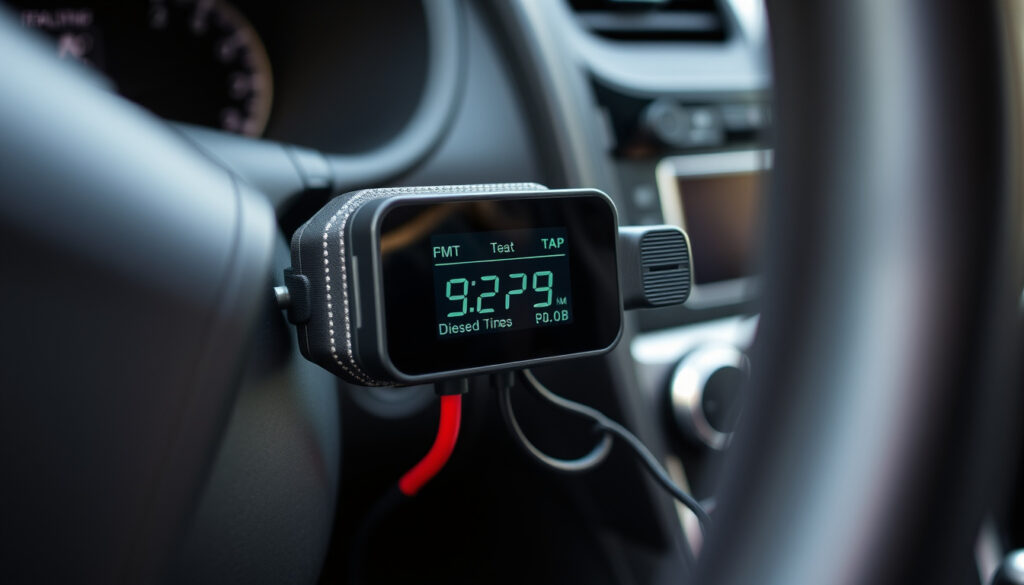
EVC Throttle Controller: Is It Worth Buying
Anyone who’s driven a modern car with a fly-by-wire throttle knows the feeling: you press the pedal, and there’s a tiny pause before the engine responds. That lag is what the EVC throttle controller promises to fix, and it’s sparked a lively debate among drivers. This article cuts through the marketing to examine what this device actually does, where it falls short, and what you should consider before plugging one into your car.
Average price range: $150–$400 USD ·
Number of driving modes: 4 (Eco, City, Sport, Sport+) ·
Adjustment levels: 20 per mode ·
Compatible vehicles: Fly-by-wire throttle systems (most cars after 2000) ·
Warranty void risk: Depends on manufacturer; generally no if removable
Quick snapshot
- Plugs between gas pedal and vehicle wiring
- Modifies throttle signal voltage
- Does not change engine software
- Adjusts pedal sensitivity curves
- Offers multiple preset modes
- Real-time adjustment via knob or app
- Sharper throttle response
- Customizable driving feel
- Plug-and-play installation
- No horsepower gain
- Possible warranty concerns
- May reduce fuel economy in aggressive modes
Six facts that define the EVC throttle controller at a glance:
| Attribute | Value |
|---|---|
| Product type | Throttle response controller |
| Installation time | 10–20 minutes |
| Device connection | Plug-and-play between pedal and harness |
| Number of modes | 4 (Eco, City, Sport, Sport+) |
| Adjustment levels | 20 per mode |
| Power gain | None (only throttle sensitivity) |
What does the EVC throttle controller do?
How it modifies the accelerator pedal signal
- The EVC throttle controller intercepts and modifies the voltage signal from the accelerator pedal to a fly-by-wire throttle system. According to the EVC Quick Start Guide (manufacturer documentation), it “modifies the voltage signal from the fly-by-wire pedal assembly” to let the driver adjust accelerator response and reduce throttle lag.
- It allows adjustment of throttle response without changing the ECU mapping. The manufacturer Ultimate9 (Australian tuning specialist) explains the device creates “new reference points for throttle mapping” and modifies “the torque request sent through to the throttle tables in the ECU.”
- The device offers multiple driving modes (Eco, City, Sport, Sport+) with up to 20 levels of adjustment. A YouTube installation guide (enthusiast demonstration) shows the EVC has four modes called Ultimate, Economy, Automatic Control, and Normal, each adjustable across ten sensitivity levels.
Compatibility with fly-by-wire systems
- Supercheap Auto (Australian auto parts retailer) states throttle controllers work by “intercepting and modifying the electronic signal from the throttle pedal.” Their guide notes compatibility depends on the vehicle having an electronically controlled throttle system — most cars built after 2000.
- The same guide warns that “throttle controllers are not available for all vehicles, even when the vehicle has an electronically controlled throttle.” This means you should check vehicle-specific compatibility before purchasing.
The EVC alters the voltage signal your car receives from the pedal, not the ECU software itself. That’s a critical difference from chip tuning — and it explains both the ease of installation and the limits of what the device can achieve.
Is an EVC throttle controller worth it?
Benefits: improved throttle response, customizable driving feel
- EVC throttle controller can make the car feel more responsive, especially in Sport modes. Ultimate9 calls it a “throttle response controller that lets users adjust throttle response for different driving styles or situations.”
- Supercheap Auto claims throttle controllers can “improve acceleration and 0-100 km/h times when set for increased throttle response.” However, this is about perceived responsiveness, not actual power output.
- The economy mode may improve fuel efficiency. Supercheap Auto states “economy mode may improve fuel efficiency” by softening the throttle curve and encouraging gentler acceleration.
Drawbacks: cost, potential warranty concerns, no power increase
- It does not increase horsepower or torque; it only changes how quickly the throttle opens. This is a point all sources agree on — the EVC modifies pedal sensitivity, not engine output.
- The device is generally removable, so it often does not void warranty if removed before dealer visits. The EVC Quick Start Guide states the device “has been thoroughly tested and will not adversely affect the vehicle or void a new car warranty.”
- Some users report reduced fuel economy in aggressive modes. Supercheap Auto notes that “high sensitivity settings can make the throttle feel fully open while the pedal is only half pressed,” which can increase fuel consumption.
The EVC delivers a sharper pedal feel at a cost of $150–400. For drivers who simply want a more immediate response without reprogramming their car, it works. For those expecting a real power boost or ECU-level tuning, it will disappoint.
What are the downsides of a throttle controller?
Potential warranty and insurance implications
- Throttle controllers can void the vehicle warranty if the manufacturer proves it caused damage. Under the Magnuson-Moss Warranty Act (FTC consumer protection rule), a dealer must prove a modification caused damage to deny warranty coverage — but the burden of proof falls on the consumer to challenge that.
- Insurance companies may consider it a modification and require disclosure. Policies vary by provider and region, and some insurers may raise premiums or deny claims if an undisclosed modification is found.
- The EVC Quick Start Guide claims the device “will not adversely affect the vehicle or void a new car warranty,” but this is the manufacturer’s position, not a legal guarantee.
Possible reduced fuel economy in sport modes
- Aggressive throttle modes cause the engine to rev higher and more quickly, which increases fuel consumption. Supercheap Auto confirms that using high sensitivity settings can reduce fuel economy significantly.
- Some drivers find the throttle response too sharp in sport modes for daily driving. The Supercheap Auto guide warns that aggressive settings can make the car feel jerky in stop-and-go traffic.
No real performance gain
- Cost ranges from $150 to $400, which some consider high for the limited effect. The EVC package is backed by a 30-day money-back guarantee, suggesting the manufacturer is aware of buyer hesitation.
- No throttle controller adds horsepower. It only changes how quickly the throttle plate opens — the engine’s maximum output remains identical.
For the $150–400 you spend, you’re buying a different driving feel — not more engine power. The real question is whether that feel justifies the cost and the added risk with your dealer or insurer.
Does an EVC void my car warranty?
Magnuson-Moss Warranty Act context
- Under the Magnuson-Moss Warranty Act (FTC consumer protection rule), a dealer must prove a modification caused damage to deny warranty coverage. The burden of proof falls on the manufacturer, not the consumer.
- However, some dealerships may flag the vehicle if they detect any aftermarket device. Even if no damage occurred, the flagged record can complicate future warranty claims.
Dealer policies and removable nature
- Since EVC is plug-and-play and easily removable, many drivers remove it before service visits. The Ultimate9 blog says the EVC “can be fitted at home in about 10 minutes,” and removal takes similar time.
- The EVC Quick Start Guide states the device “has been thoroughly tested and will not adversely affect the vehicle or void a new car warranty.” This is the manufacturer’s claim, not a universal dealer policy.
- Some dealerships may still flag the vehicle if they detect any aftermarket device, even if it was removed. The safest approach is to check with your dealer directly.
Will a throttle controller damage an ECU?
Electrical compatibility
- EVC throttle controllers are designed to operate within the vehicle’s voltage range and do not modify ECU software. The EVC Quick Start Guide confirms it only “modifies the voltage signal” without altering ECU maps.
- The device creates “new reference points for throttle mapping” at the signal level, not at the ECU level, according to the Ultimate9 blog.
Overvoltage protection
- Reputable brands include overvoltage protection and fail-safe modes. The EVC Quick Start Guide mentions the device “has been thoroughly tested” for electrical safety.
- There is no documented evidence of a properly installed throttle controller damaging an ECU. Multiple sources, including Supercheap Auto and Ultimate9, confirm the device works within safe electrical parameters.
Long-term reliability
- There is no documented evidence of a properly installed throttle controller damaging an ECU. The Ultimate9 blog emphasizes the device is “thoroughly tested” and safe for long-term use.
- Installation instructions from multiple sources, including this YouTube guide (enthusiast installation demo), recommend de-powering the vehicle for at least ten minutes before installation to avoid electrical issues.
How to install an EVC throttle controller (step-by-step guide)
Tools required
- Installation typically requires no special tools; the device plugs between the accelerator pedal connector and the pedal itself. Ultimate9 says “the EVC Throttle Controller can be fitted at home in about 10 minutes.”
- Most EVC controllers come with a wiring diagram and manual. The EVC Quick Start Guide provides a complete installation diagram.
- A YouTube installation demo for the EVC/iDrive (enthusiast installation video) shows the controller simply plugs in between the factory pedal assembly and the pedal plug.
Connection to pedal assembly
- The vehicle should be turned off and de-powered for at least ten minutes before installation, according to the same YouTube guide.
- A separate YouTube installation video (enthusiast guide) says the throttle controller installs by unplugging the throttle connector and inserting the provided harness in between.
- The same video recommends cleaning the mounting pad with alcohol before the 3M adhesive is applied to ensure proper adhesion.
Testing and calibration
- After installation, users should test all modes to ensure proper function. The EVC Quick Start Guide provides a calibration procedure.
- Supercheap Auto recommends that “the display should be mounted where it is visible and operable while driving, but not distracting or too bright at night.”
- The YouTube installation guide shows the final step is cycling through all four modes and adjusting sensitivity to confirm the controller responds correctly.
“The EVC works by creating new reference points for throttle mapping and modifying the torque request sent through to the throttle tables in the ECU.”
— Ultimate9 (Australian tuning manufacturer)
“A throttle controller works by intercepting and modifying the electronic signal from the throttle pedal.”
— Supercheap Auto (Australian auto parts retailer)
“The device has been thoroughly tested and will not adversely affect the vehicle or void a new car warranty.”
— EVC Throttle Controller Quick Start Guide (manufacturer documentation)
“The display should be mounted where it is visible and operable while driving, but not distracting or too bright at night.”
— Supercheap Auto beginner’s guide
The EVC throttle controller delivers exactly what it promises: a sharper, more responsive pedal feel. For a driver who finds their car’s factory throttle calibration too lazy, the investment makes sense — just don’t expect more horsepower or guaranteed dealer goodwill. For the US buyer considering this upgrade, the decision is clear: if perceived responsiveness matters more than real power gains, and you’re comfortable removing it before dealer visits, the EVC is a legitimate accessory. If you want actual performance tuning, your money is better spent on an ECU remap.
Related reading: EVC Throttle Controller: Worth It? Pros, Cons, and Warranty · Ford Super Duty: Prices, Problems, Specs & Buying Guide
Frequently asked questions
Can I install an EVC throttle controller myself?
Yes. Most EVC controllers are designed for simple plug-and-play installation. Ultimate9 states it “can be fitted at home in about 10 minutes” with no special tools. Multiple YouTube installation guides demonstrate the process.
Does an EVC throttle controller work with diesel engines?
Yes, as long as the diesel vehicle uses a fly-by-wire throttle system. Most diesel cars built after 2000 have electronically controlled throttles compatible with the EVC controller.
What is the difference between EVC and Pedal Commander?
Both are throttle response controllers that modify the voltage signal from the accelerator pedal. The main differences are in the number of modes, app connectivity, and price point. The EVC typically offers 4 modes with 20 adjustment levels, while Pedal Commander offers 4 modes with adjustable sensitivity. Check compatibility with your specific vehicle model.
Will an EVC throttle controller set off a check engine light?
Generally no. Since the EVC does not modify ECU software and only alters the pedal signal, it should not trigger a check engine light. Supercheap Auto and Ultimate9 both confirm no documented cases of a properly installed throttle controller triggering warning lights.
Does an EVC throttle controller work with automatic transmission?
Yes. The EVC works independently of the transmission type. It modifies the throttle signal before it reaches the ECU, which then controls the transmission normally. Both manual and automatic vehicles can use the device.
How do I choose the right mode for my driving?
Start with Economy mode for daily commuting to save fuel accordng to Supercheap Auto. Use City mode for normal driving. Switch to Sport or Sport+ for highway merging or spirited driving. The EVC Quick Start Guide recommends testing each mode in a safe area before regular use.
Is an EVC throttle controller legal on public roads?
Yes, in most jurisdictions. Since the EVC does not modify emissions systems or affect vehicle safety equipment, it is generally legal. However, local laws vary, and some regions may have restrictions on aftermarket modifications. Check your local regulations and with your insurance provider.
More related posts
 Ariana Greenblatt: Age, Net Worth, Ethnicity, and Career
 She’s the Man Streaming Guide – Where to Watch in UK
 Womens Cardigan Guide: What’s In & How to Wear It in 2026
 Men’s Wedding Bands: Cost, Styles, & Irish Traditions
 Sony ZV-E1 vs ZV-E10: Full-Frame Worth It?
 450 USD to AUD: Live Converter & Exchange Rate Today
 Tripti Dimri: Biography, Age, Movies & Relationship Status
 Donna Summer: Queen of Disco – Cause of Death & Legacy