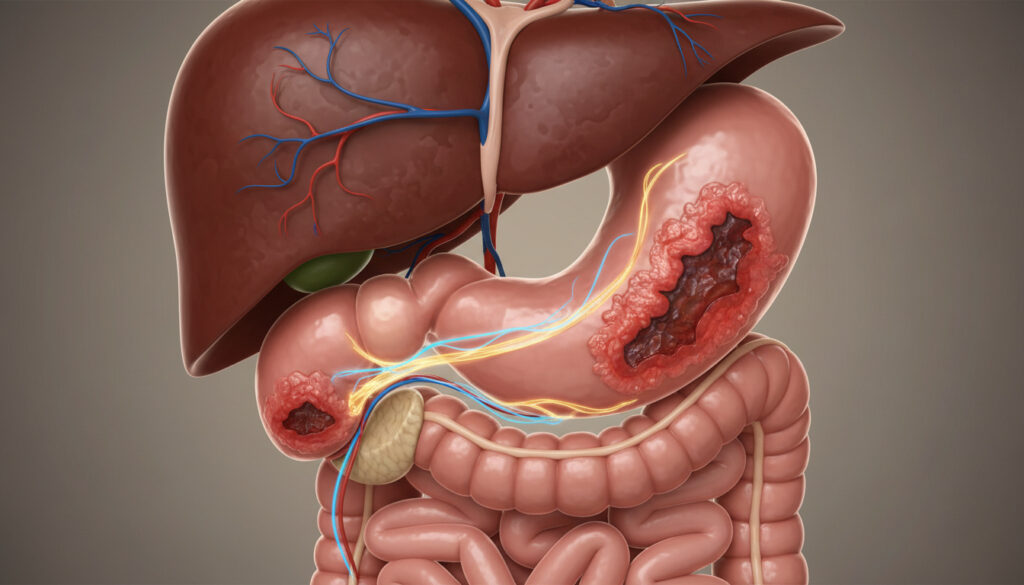
What Does the Pancreas Do – Anatomy, Functions and Disorders
The pancreas maintains a dual existence within the abdomen, operating as both a digestive engine and a metabolic regulator. This long, slender organ sits posterior to the bottom half of the stomach, orchestrating processes essential for survival through two distinct functional systems.
Almost 95% of the organ consists of exocrine tissue dedicated to breaking down food, while the remaining percentage houses endocrine cells that secrete hormones directly into the bloodstream. This anatomical division allows the pancreas to simultaneously manage digestion and glucose metabolism, influencing everything from nutrient absorption to brain function.
Understanding these integrated roles clarifies why pancreatic dysfunction manifests across such diverse medical conditions, from diabetes mellitus to malabsorption disorders. The organ’s physical location and cellular architecture create a unique intersection between the gastrointestinal and endocrine systems.
What Does the Pancreas Do?
Dual System Operation
Endocrine hormone production and exocrine enzyme secretion function as separate but coordinated systems within the same organ.
Strategic Location
Positioned behind the stomach, the organ releases secretions into the duodenum while monitoring blood glucose levels.
Metabolic Control
Insulin and glucagon regulate blood sugar levels crucial for brain, liver, kidney, and heart function.
Digestive Processing
Acinar cells generate enzymes capable of breaking down carbohydrates, fats, proteins, and nucleic acids.
- The exocrine tissue comprises over 90% of total pancreatic mass, handling digestive enzyme production.
- Beta cells constitute approximately 75% of islet cells, manufacturing insulin that lowers blood sugar while promoting acinar cell growth.
- Enzymes release in inactive zymogen form, activating only upon reaching the small intestine to prevent self-digestion.
- Over 90% of pancreatic cancers originate within the exocrine region rather than the endocrine islets.
- The organ secretes bicarbonate to neutralize stomach acid entering the duodenum.
- Incretin hormones from the small intestine stimulate beta cell function, leading to DPP-4 inhibitor treatments for diabetes.
| Feature | Specification |
|---|---|
| Anatomical Position | Posterior to bottom half of stomach |
| Tissue Distribution | ~95% exocrine, ~5% endocrine |
| Exocrine Composition | Acinar cells (>90% of total pancreas) |
| Endocrine Structure | Islets of Langerhans (5 cell types) |
| Primary Hormones | Insulin, glucagon, somatostatin |
| Key Enzymes | Amylase, lipase, proteases, nucleases |
| Activation Site | Duodenum (small intestine) |
| Stimulating Hormones | Cholecystokinin (CCK) and secretin |
Where Is the Pancreas Located?
The organ extends horizontally across the posterior abdomen, tucked behind the stomach in a position that allows it to deliver secretions directly into the digestive tract while maintaining vascular access for hormonal release into systemic circulation. This retroperitoneal placement shields much of the organ from direct palpation during physical examination.
What Side Is the Pancreas On?
Anatomically, the pancreas spans both the left and right upper quadrants, with the head nestling into the curve of the duodenum on the right side and the tail extending toward the spleen on the left. This transverse orientation allows the organ to distribute enzymes efficiently into the small intestine while the islets of Langerhans remain centrally positioned for optimal blood supply.
How Big Is the Pancreas?
The pancreas is long and slender, typically measuring approximately six to ten inches in adult humans, though specific dimensional measurements vary across anatomical references.
The Pancreas Anatomy and Functions detail how this positioning facilitates the dual drainage systems: ducts carrying enzymes to the gut and blood vessels carrying hormones to the liver and systemic circulation.
What Are the Endocrine Functions of the Pancreas?
The endocrine pancreas operates through approximately one to two percent of the organ’s total cellular mass, concentrated within the islets of Langerhans. These microscopic clusters contain five distinct cell types, each manufacturing specific peptide hormones that regulate metabolism, growth, and satiety.
What Hormones Does the Pancreas Produce?
Five endocrine cell types populate the islets, each with specialized secretory products. Beta cells, comprising roughly three-quarters of the islet population, produce insulin, which lowers blood glucose and simultaneously functions as a trophic factor stimulating acinar cell growth and enzyme synthesis. Alpha cells manufacture glucagon, which elevates blood sugar levels during fasting states. Delta cells release somatostatin to modulate pancreatic secretions, while gamma cells produce pancreatic polypeptide (PP) and epsilon cells secrete ghrelin, which stimulates appetite and growth hormone release while inhibiting insulin secretion.
| Cell Type | Hormone | Primary Function |
|---|---|---|
| Beta cells (~75%) | Insulin | Lowers blood sugar; promotes acinar cell growth |
| Alpha cells | Glucagon | Raises blood sugar |
| Delta cells | Somatostatin | Regulates pancreatic secretions |
| Gamma cells | Pancreatic polypeptide | Regulates pancreatic secretions |
| Epsilon cells | Ghrelin | Stimulates appetite; inhibits insulin |
How Does the Pancreas Regulate Blood Sugar?
Insulin and glucagon function as antagonistic partners in glucose homeostasis. When blood sugar rises after meals, beta cells release insulin to facilitate cellular uptake and storage of glucose. Conversely, during fasting or hypoglycemic states, alpha cells secrete glucagon to trigger glycogen breakdown and glucose release from the liver. This hormonal interplay maintains stable blood glucose levels essential for brain, liver, kidney, and cardiac function, as documented in endocrine physiology texts.
Additionally, incretin hormones produced in the small intestine—glucose-dependent polypeptide (GIP) and glucagon-like peptide 1 (GLP-1)—augment beta cell function and enhance insulin secretion. GLP-1 additionally regulates appetite and satiety, with associations to weight loss observed in clinical contexts. The enzyme dipeptidyl peptidase 4 (DPP-4) degrades these incretins, a mechanism that has led to the development of DPP-4 inhibitors as established treatments for type 2 diabetes mellitus.
The discovery that DPP-4 degrades incretin hormones has directly informed modern pharmaceutical interventions. DPP-4 inhibitors now serve as established therapeutic options for managing type 2 diabetes by prolonging the activity of endogenous incretins.
What Are the Exocrine Functions of the Pancreas?
The exocrine system dominates the pancreatic architecture, comprising over 90% of the organ’s tissue mass through acinar cells clustered like grape bunches. These cells manufacture, store, and secrete digestive enzymes capable of dismantling all major nutrient categories.
What Enzymes Does the Pancreas Produce?
Acinar cells generate a spectrum of digestive enzymes including amylase for carbohydrate breakdown, lipase for fat digestion, proteases (specifically trypsinogen and chymotrypsin) for protein cleavage, and nucleases for nucleic acid processing. These enzymes exit the cells in an inactive precursor form called zymogens, traveling through a branching network of ducts that converge into the main pancreatic duct before entering the duodenum. This inactive transport prevents premature activation and autodigestion of the pancreatic tissue itself.
The release of these secretions responds to hormonal signals from the small intestine. Cholecystokinin (CCK) and secretin, produced when food enters the duodenum, trigger the pancreas to discharge enzymatic content. Once in the intestinal lumen, these zymogens activate to dismantle carbohydrates, fats, and proteins into absorbable molecular components.
How Does the Pancreas Aid Digestion?
Beyond enzymatic secretion, the exocrine pancreas produces alkaline bicarbonate that neutralizes hydrochloric acid from the stomach as chyme enters the duodenum. This pH adjustment creates the optimal chemical environment for enzymatic activity while protecting the intestinal mucosa from acid damage. The Digestive Enzyme Support systems rely on this precise alkaline-enzyme combination to process nutrients effectively.
The crosstalk between endocrine and exocrine systems optimizes this digestive capacity. Insulin from beta cells stimulates amylase synthesis and secretion while promoting acinar cell proliferation, creating a feedback loop where metabolic regulation directly enhances digestive enzyme production.
Over 90% of pancreatic cancers originate within the exocrine tissue rather than the endocrine islets, according to exocrine function research. This statistic underscores the clinical vulnerability of the acinar cell population despite its primarily digestive role.
What Happens When the Pancreas Doesn’t Work Properly?
Pancreatic dysfunction disrupts both nutritional processing and metabolic regulation. Type 2 diabetes mellitus emerges when beta cells fail to secrete adequate insulin or when peripheral tissues develop resistance to its effects, leading to persistent hyperglycemia. The incretin pathway has become a critical therapeutic target for management, with DPP-4 inhibitors now established as standard pharmaceutical interventions.
Malignancy presents another catastrophic failure mode. Over 90% of pancreatic cancers originate within the exocrine tissue, particularly affecting the ductal structures or acinar cells. This predominance reflects the massive cellular volume of the exocrine compartment compared to the microscopic islet clusters. While specific etiological mechanisms remain under investigation, the anatomical distribution of malignancies correlates directly with tissue mass ratios.
How Has Our Understanding of the Pancreas Evolved?
The progression of pancreatic knowledge spans from anatomical description to molecular characterization. The sequence of discovery generally followed the organ’s structural complexity, beginning with macroscopic ductal systems and advancing to cellular endocrinology.
- Anatomical characterization of the pancreatic duct system (17th century, exact dates not definitively established)
- Histological identification of the islets of Langerhans (19th century)
- Isolation and therapeutic application of insulin (early 20th century)
- Characterization of glucagon and secondary hormones (mid-20th century)
- Discovery of incretin hormones and DPP-4 enzyme interactions (late 20th to early 21st century)
- Current research into beta cell regeneration and stem cell applications (ongoing)
Contemporary investigations focus on the crosstalk mechanisms between endocrine and exocrine systems, particularly how insulin functions as a trophic factor for acinar cells. Research into regenerative therapies and stem cell applications continues, though detailed findings remain under development in current medical literature.
What Is Established Versus What Remains Under Investigation?
| Established Facts | Research Continues |
|---|---|
| Dual exocrine/endocrine function with 95%/5% tissue distribution | Precise historical chronology of anatomical discoveries |
| Five islet cell types with specific hormone profiles | Standardized dimensional measurements (exact length/weight) |
| Specific enzyme identities: amylase, lipase, proteases, nucleases | Complete protocols for beta cell regeneration |
| Mechanism of zymogen activation in duodenum | Stem cell therapeutic applications for diabetes |
| DPP-4 degradation of incretins and inhibitor treatments | Long-term outcomes of incretin-based weight loss interventions |
| Exocrine origin of >90% pancreatic cancers | Prevention strategies for pancreatic malignancies |
Why Does the Pancreas Integrate Digestion and Metabolism?
The anatomical convergence of digestive and endocrine functions within a single organ reflects an evolutionary optimization of nutrient processing. The crosstalk between systems—where insulin stimulates acinar cell growth and enzyme synthesis—creates an efficient feedback mechanism linking metabolic status to digestive capacity. When blood glucose rises, signaling adequate energy availability, the pancreas simultaneously prepares to process incoming nutrients by upregulating enzyme production.
This integration extends to incretin hormones produced in the small intestine, which coordinate the timing of insulin release with the arrival of food in the gut. The DPP-4 enzyme serves as a molecular timer, degrading these signals once the meal has been processed. Understanding this gut-pancreas axis has transformed type 2 diabetes management, moving beyond simple insulin replacement to modulation of the body’s endogenous signaling systems.
What Do Medical Authorities Confirm?
“The pancreas performs two essential purposes: The exocrine function produces and secretes digestive enzymes, while the endocrine function produces hormones that control blood glucose levels.”
— Seena Magowitz Foundation and NIH/PMC Research
“Insulin and glucagon are the main pancreatic hormones responsible for regulating glucose metabolism and maintaining proper blood sugar levels, which is crucial for the functioning of the brain, liver, kidneys, and heart.”
— SUNY AP2 Endocrine Physiology, Columbia Surgery, Cleveland Clinic
“The exocrine cells comprise over 90% of the pancreas. The acinar cells produce, store, and secrete digestive enzymes including amylase, lipase, proteases, and nucleases.”
— Exocrine Function Research and Columbia Surgery
What Is the Essential Role of the Pancreas?
The pancreas maintains physiological equilibrium through dual but integrated systems: exocrine cells secreting digestive enzymes into the gut and endocrine cells releasing hormones into the blood. This architecture enables simultaneous processing of nutrients and regulation of blood glucose, with insulin and glucagon providing minute-to-minute metabolic control while amylase, lipase, and proteases dismantle dietary components. Dysfunction in either system manifests as diabetes or malabsorption, underscoring the organ’s central importance to survival. For additional anatomical context, see Pancreas Anatomy and Functions.
Frequently Asked Questions
What side is the pancreas on?
The pancreas spans both sides of the upper abdomen. The head sits in the duodenal curve on the right, while the tail extends toward the spleen on the left.
How big is the pancreas?
Medical sources describe the pancreas as long and slender, typically measuring approximately six to ten inches in adult humans, though exact dimensions vary by anatomical reference.
What happens when the pancreas stops working?
Endocrine failure causes diabetes due to insulin deficiency, while exocrine failure leads to malabsorption and nutritional deficiencies due to lack of digestive enzymes.
How does the pancreas protect itself from its own enzymes?
The pancreas releases enzymes as inactive zymogens that activate only upon reaching the small intestine, preventing autodigestion of the organ’s own tissue.
What stimulates the pancreas to release enzymes?
The hormones cholecystokinin (CCK) and secretin, produced when food enters the small intestine, stimulate the pancreas to secrete digestive enzymes and bicarbonate.
Why do most pancreatic cancers affect the exocrine tissue?
Over 90% of pancreatic cancers originate in exocrine tissue because acinar and ductal cells constitute more than 90% of the organ’s total cellular mass.
More related posts
 Alan Cumming: Net Worth, Height, Husband, Movies & TV Shows
 Brad Garrett: Why He Left Raymond, Sobriety, and Life Today
 Judd Nelson: Life and Career After The Breakfast Club
 Sophia Katseye: Biography, Facts, and Role in KATSEYE
 Everest Peak: Height, Costs, Rules, and History | Expert Guide
 Giorgia Meloni: Biography, Politics, Personal Life & Facts
 Mt Baw Baw Guide: Cost, Beginners & Buller vs