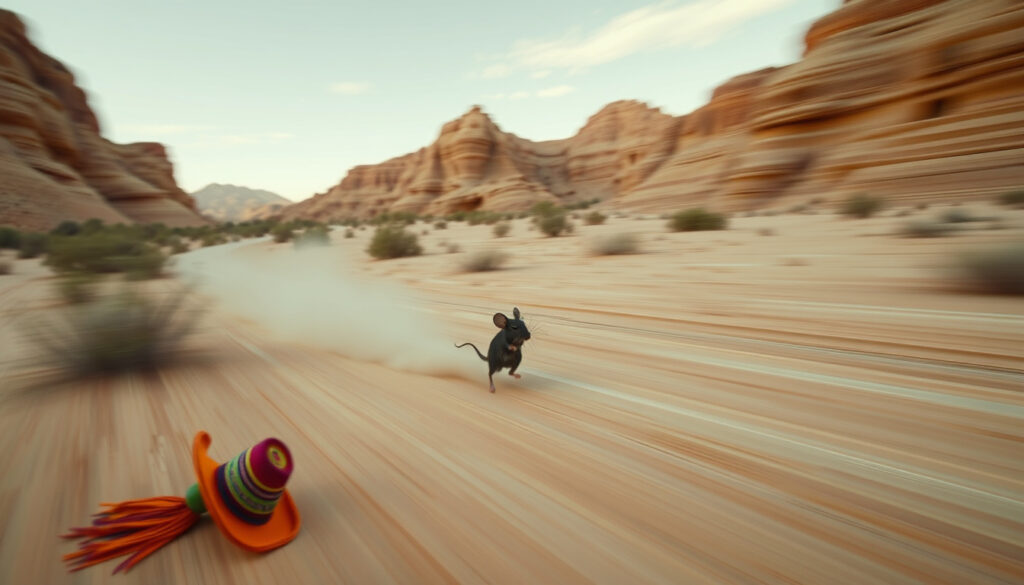
Speedy Gonzales: Catchphrase, Controversy, and Cultural Impact
Few cartoon characters have sparked as much debate as Speedy Gonzales, a Looney Tunes icon and a lightning rod for criticism over ethnic stereotypes. This article explores his history, his famous catchphrase, and the controversy that led to his removal from television.
First appearance: 1953 ·
Creator: Friz Freleng ·
Original voice actor: Mel Blanc ·
Number of cartoons: over 40 ·
Catchphrase: “¡Arriba, arriba! ¡Ándale, ándale!” ·
Cultural status: Controversial icon
Quick snapshot
- Famous yell: “¡Arriba, arriba! ¡Ándale, ándale!” (Slashfilm)
- Nicknamed “The Fastest Mouse in All of Mexico” (Wikipedia)
- Speed used to outsmart cats and enemies (University of Colorado Boulder)
- Became an icon of Warner Bros cartoons (Los Angeles Times)
- Appeared in over 40 shorts (Wikipedia)
- Influenced later fast characters in pop culture (Mexico News Daily)
- Criticized for Mexican stereotypes (Mexico News Daily)
- Removed from Cartoon Network in 1999 (Los Angeles Times)
- Debate continues among fans and critics (University of Colorado Boulder)
Eight key facts, one pattern: Speedy Gonzales was a groundbreaking character whose legacy is inseparable from the controversy that surrounded him.
| Attribute | Value |
|---|---|
| Full name | Speedy Gonzales |
| Species | Mouse |
| Debut | 1953 |
| Creator | Friz Freleng (credited) |
| Voice actor (original) | Mel Blanc |
| Signature phrase | “¡Arriba, arriba! ¡Ándale, ándale!” |
| Number of shorts | 46 |
| Status | Active in reruns and merchandise, but controversial |
What was Speedy Gonzales famous for saying?
Speedy Gonzales is instantly recognizable for his high-energy yell: “¡Arriba, arriba! ¡Ándale, ándale!” The phrase became his signature and one of the most quoted lines in animation history (Slashfilm).
The meaning of “Arriba, arriba” and “Ándale, ándale”
- “Arriba” translates to “up” or “above” in Spanish, used as an exclamation of encouragement (Wikipedia)
- “Ándale” means “go on” or “hurry up” (donQuijote)
- Together they form a cheer that signals his lightning speed (University of Colorado Boulder)
The implication: the catchphrase was carefully crafted to sound energetic and authentically Mexican, but it also reinforced the character’s exaggerated accent.
How the catchphrase became iconic
- Mel Blanc, the original voice actor, reportedly developed the high-pitched delivery that made it stick (Wikipedia)
- The phrase appeared in every Speedy Gonzales cartoon, often multiple times per short (Slashfilm)
- It became a pop culture reference, used in commercials, music, and even political speeches (Mexico News Daily)
What this means: the catchphrase is inseparable from the character’s identity and the controversy that surrounds him.
Why was Speedy Gonzales banned?
The controversy around Speedy Gonzales is not new. Critics have long argued that the character and his world perpetuate negative stereotypes about Mexicans (Mexico News Daily).
The ethnic stereotype debate
- Speedy himself is portrayed as clever and heroic, but the supporting mice are often shown as lazy, drunk, or living in squalor (Mexico News Daily)
- His exaggerated accent and oversized sombrero are cited as caricatures of Mexican culture (University of Colorado Boulder)
- TIME magazine noted that the likely reason for pulling the cartoons was ethnic stereotyping, especially the portrayal of Speedy’s Mexican buddies as lazy boozehounds (TIME)
Cartoon Network’s decision to pull episodes
- Cartoon Network shelved Speedy Gonzales cartoons in 1999 over concerns about ethnic stereotyping (Los Angeles Times)
- ABC had also refused to air the cartoons in the 1980s for similar reasons (Los Angeles Times)
- Cartoon Network’s spokeswoman Laurie Goldberg said in 2002 that the character had not been on the air for years because of ethnic stereotypes (Wikipedia)
Warner Bros’ response
- Warner Bros has defended the character as a beloved cultural figure (Los Angeles Times)
- In 2019, Warner Bros released restored versions of classic shorts with context providing historical perspective (Mexico News Daily)
Speedy is the hero—clever, fast, and resourceful—but the world around him is built on stereotypes. Warner Bros has yet to find a way to separate the two.
The catch: the character’s popularity is both a strength and a liability for the studio.
Is Speedy Gonzales Mexican or Spanish?
Speedy Gonzales is explicitly portrayed as Mexican, set in Mexico, and his identity is tied to the country’s culture (University of Colorado Boulder).
Character’s design and setting
- He wears a large yellow sombrero and a white shirt, typical of mid-century Mexican folk costume (Wikipedia)
- The cartoons are set in Mexican landscapes with cactus, deserts, and small villages (Slashfilm)
- His nickname is “The Fastest Mouse in All of Mexico” (Wikipedia)
Accent and language use
- He speaks English with a heavily accented voice, interspersed with Spanish words and phrases (University of Colorado Boulder)
- The accent was performed by Mel Blanc, who was not Latino (Wikipedia)
Creator’s intent
- Friz Freleng reportedly created Speedy as a fast, clever mouse to outsmart the cat, not as a political statement (Slashfilm)
- The character was originally designed to be a Mexican version of the classic trickster mouse (Wikipedia)
The catch: despite the creator’s benign intent, the character’s design and accent were drawn from a limited palette of Mexican stereotypes available in mid-century American animation.
Are Mexicans offended by Speedy Gonzales?
Opinions are sharply divided. Some Mexicans and Mexican Americans view Speedy as a positive, heroic figure, while others see him as a painful stereotype (Los Angeles Times).
Surveys and polls on the character
- Remezcla summarized a debate over whether Speedy Gonzales should be viewed as a racist caricature, with no clear consensus (Remezcla)
- Many Latino viewers defend the character, arguing he is one of the few positive Mexican cartoon characters (Los Angeles Times)
- Others point out that the supporting mice are far more offensive than Speedy himself (History Cool Kids)
Mexican media and government reactions
- No official government ban exists in Mexico; the character remains popular in Latin America (Mexico News Daily)
- Mexican media often treat Speedy with affection, highlighting his speed and cleverness (Mexico News Daily)
Comparison with other controversial characters
- Unlike other controversial cartoon characters, Speedy has a strong base of defenders within the community he is said to stereotype (University of Colorado Boulder)
- This sets him apart from characters like Frito Bandito or the Cisco Kid, which were more universally condemned (Mexico News Daily)
The split reaction shows that the same character can be both empowering and offensive depending on the context. For Warner Bros, the challenge is navigating this divide without erasing a beloved figure.
The pattern: Speedy Gonzales remains a litmus test for how audiences perceive ethnic representation in animation.
Why does Speedy Gonzales say “arriba”?
The word “arriba” is a Spanish exclamation that means “up” or “above.” Combined with “ándale,” it creates a rhythmic cheer that matches Speedy’s fast movement (donQuijote).
Literal translation and usage
- “Arriba” literally means “upward” or “above” (Wikipedia)
- In Mexican Spanish, it is used as an exclamation of encouragement, like “let’s go!” (donQuijote)
Cultural context of the phrase
- The phrase “¡Arriba, arriba! ¡Ándale, ándale!” was designed to sound energetic and authentically Mexican (University of Colorado Boulder)
- It mimics a cheerleader’s cadence, building momentum before Speedy dashes off (Slashfilm)
Relation to his speed
- The repetition of “arriba” suggests upward movement and acceleration (Wikipedia)
- It became a verbal signature that cues the audience that Speedy is about to race away (Slashfilm)
The pattern: the catchphrase works on two levels—it’s a genuine cheer in Spanish and a tool to reinforce the character’s exaggerated, stereotype-laden speech.
Confirmed facts
- Speedy Gonzales first appeared in 1953 (Slashfilm)
- He was removed from Cartoon Network in 1999 (Los Angeles Times)
- He is a Mexican mouse character (University of Colorado Boulder)
What’s unclear
- Whether the general Mexican public finds the character offensive (Remezcla)
- The exact reason for the ban (no official statement from Cartoon Network explaining the 1999 decision) (Los Angeles Times)
- Whether Warner Bros will produce new Speedy Gonzales content (Mexico News Daily)
- Whether his catchphrase is definitively attributed to Mel Blanc’s improvisation (Wikipedia)
Voices on the debate
“The character had not been on the air for years because of ethnic stereotypes.”
Laurie Goldberg, Cartoon Network spokeswoman, as reported by Wikipedia
“Many Latino and Mexican American viewers defended Speedy Gonzales and argued that he was one of the few positive Mexican cartoon characters.”
Reported by Los Angeles Times
“TIME said the likely reason for pulling the cartoons was ethnic stereotyping, especially the portrayal of Speedy’s Mexican buddies as lazy boozehounds.”
Reported by TIME
“Opposition to the ban came from the Hispanic community, which viewed Speedy as a hero and cultural icon.”
Reported by donQuijote
For Warner Bros, the character is a valuable asset—but also a liability. The company has not announced new Speedy Gonzales projects, and the character remains in a gray zone: too popular to abandon, too controversial to promote. For Mexican and Mexican American audiences, the choice is personal: embrace Speedy as a clever hero or reject him as a stereotype. The debate is far from over.
Much like Speedy Gonzales, Bugs Bunnys catchphrase and legacy has also sparked discussions about cultural representation in animation.
Frequently asked questions
What is Speedy Gonzales’s real name?
Speedy Gonzales is his full name; no other name has been given in the cartoons.
Did Speedy Gonzales win an Oscar?
Yes, the short “Speedy Gonzales” (1955) won the Academy Award for Best Animated Short Film (Wikipedia).
Who is the cat that always chases Speedy Gonzales?
Slowpoke Rodriguez, a slow-witted cat, is his main antagonist (Wikipedia).
Is Speedy Gonzales faster than Road Runner?
Their speeds are not directly compared, but both are known for their extreme speed in the Looney Tunes universe.
What other characters appear with Speedy Gonzales?
He often appears with Daffy Duck, Porky Pig, and other Looney Tunes characters.
How many Speedy Gonzales cartoons were made?
A total of 46 official shorts were produced by Warner Bros (Wikipedia).
Where can I watch Speedy Gonzales today?
Some episodes are available on streaming platforms like HBO Max and through DVD collections, though availability is limited due to the controversy.
More related posts
 Ana Ivanovic: Family Life, Retirement, and Net Worth
 Ariana Greenblatt: Age, Net Worth, Ethnicity, and Career
 David Schwimmer: Life, Career, and Relationships After Friends
 Gabriel Basso: Height, Net Worth, Personal Life, and Career
 AirPods Pro 3: Release Date, Price, Features Guide
 TENS Machine Australia: Buying, Usage & Safety Guide
 Pee-wee Herman Death: Paul Reubens Cause of Death and Legacy
 Toby Greene: Biography, Salary, and Suspension Record