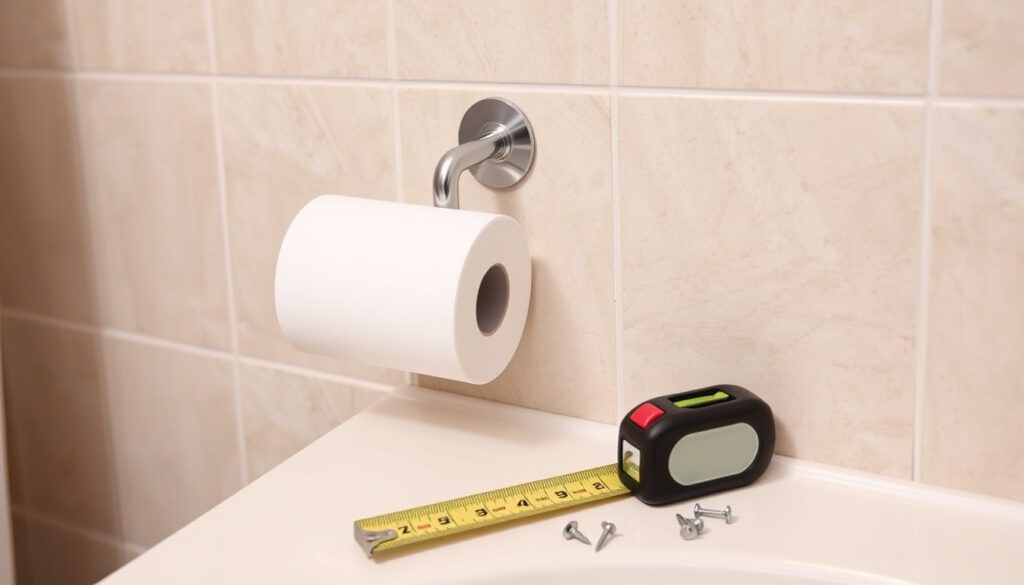
TP Holder: Placement, Installation, and Selection Tips
You probably don’t think about your toilet paper holder more than once every few months — when the roll runs out or the bracket wobbles. But getting the placement and installation right can save you daily annoyance and even prevent plumbing headaches.
Standard height: 26 inches from floor ·
Distance from toilet: 10–12 inches ·
Most common type: Wall‑mounted ·
Installation time: 15–30 minutes
Quick snapshot
- Standard height: 26 in from floor (The Home Depot – US DIY retailer)
- Distance: 8–12 in from toilet bowl (Modo Bath – bathroom hardware specialist)
- Overhand orientation preferred by ~60 % (Wikipedia – crowdsourced reference)
- Exact share of water‑based cleaning vs. paper worldwide varies by source
- Psychological reasons behind orientation preference not universally agreed upon
- Wall‑mounted holders became standard in U.S. bathrooms by the 1970s (Wikipedia – general reference)
- Pivoting holders gaining traction in the 2010s for waste reduction (Wikipedia – general reference)
- Consider a pivoting holder to reduce paper waste (Modo Bath)
- Check wall type (drywall, tile, stud) before choosing adhesive or screw mounting (The Home Depot)
Five key specs distilled from manufacturer guides and building recommendations.
| Attribute | Recommended value |
|---|---|
| Standard height (floor to center) | 26 inches |
| Distance in front of toilet bowl | 8–12 inches |
| Most common wall type | Drywall, tile, wood |
| Most popular material | Chrome‑plated brass |
| Orientation preference | ~60 % overhand, ~40 % underhand |
| Mounting options | Screw‑in (stud or anchor) or adhesive |
| Roll diameter compatibility | Standard 1/2‑inch spindle |
| Weight capacity (typical) | 5–10 lb |
| Installation time | 15–30 minutes |
| ADA compliance | 26‑inch height meets ADA guidelines |
Where should a TP holder go?
Optimal distance from toilet
- Most guides agree on 8–12 inches from the front of the bowl to the center of the holder (The Home Depot – DIY retailer; Zogics – commercial bathroom supplier).
- Shorter users may prefer 8–9 inches; taller users 10–12 inches (The Home Depot).
Standard height from floor
- 26 inches from floor to center of the roll is the most frequently recommended height (Modo Bath – hardware specialist).
- ADA guidelines also point to this height for accessibility (26 in).
Clearance for easy reach
- Avoid placing the holder behind the toilet or inside a cabinet where you have to twist or stretch.
- Keep at least 3 inches of clearance from any wall or obstruction on the sides.
The catch: The 8–12 inch range isn’t one‑size‑fits‑all. Measure from your own seated reach, especially if multiple people use the same bathroom.
How to Install a Toilet Paper Holder
Tools needed
- Drill (with drill bits for your wall type), level, screwdriver, pencil, tape measure.
- Wall anchors if mounting into drywall without a stud (The Home Depot).
- Masonry bit if installing onto tiled wall (Zogics – installation guide).
Step‑by‑step wall‑mounting
- Mark the desired height (26 inches) and horizontal position (8–12 inches from bowl) with a pencil.
- Use a level to ensure the holder will be perfectly horizontal (The Cleaning Station – bathroom care blog).
- Drill pilot holes. If no stud, insert drywall anchors.
- Screw the mounting bracket(s) into place.
- Attach the holder arm or plate, then test with a roll.
For related bathroom projects, see our Shower Head Guide: Compatibility, Types, and Tips for Ireland.
Adhesive vs. screw installation
- Adhesive holders work well on smooth, clean tile but may fail on textured or wallpaper surfaces.
- Screw‑in holders are more secure and can support heavier rolls.
- For renters, adhesive can avoid wall damage, but check the weight limit.
A wobbly holder is worse than no holder. Screw‑in installation with anchors takes an extra 10 minutes but will never let you down mid‑roll.
What this means: If you have tile walls, adhesive is tempting but often peels off in humid bathrooms. A few drill holes and anchors give peace of mind.
How do you choose the right TP holder?
Wall‑mounted vs. freestanding
- Wall‑mounted saves floor space and looks clean; requires wall drilling.
- Freestanding (floor‑standing or over‑tank) is ideal for renters or bathrooms with non‑drillable walls.
Pivoting vs. fixed
- Pivoting holders have an arm that swings out, making roll changes easier and accommodating different roll diameters (Modo Bath – product overview).
- Fixed holders are cheaper and more common but can cause paper waste when over‑rotation spins off too much.
Material and finish options
- Chrome and stainless steel resist bathroom humidity and are easiest to clean.
- Matte, brushed, and glossy finishes match different faucet and accessory lines.
- Plastic holders are lightweight and cheap but may yellow over time.
For office ergonomics, check our Standing Desk Ireland: Best Electric Desks Compared.
That sleek chrome pivoting holder costs twice as much as a basic plastic fixed model — but you’ll replace cheap plastic twice before the chrome one ever needs to be touched.
Why this matters: Material choice directly affects longevity. A bathroom with high humidity and frequent cleaning cycles is much kinder to stainless steel than to plastic.
What is a pivoting TP holder?
How the pivoting mechanism works
- An arm connected to a hinge swings outward, allowing you to slide a new roll onto the spindle without removing any parts.
- It can hold rolls of different diameters because the arm isn’t fixed against the wall.
Benefits over fixed holders
- Reduces paper waste: because the roll doesn’t over‑rotate against a fixed bar, you can tear off precisely the amount you need.
- Easier to load: no need to push a spring‑loaded spindle or struggle with tight clearances.
- Accommodates jumbo rolls often used in commercial settings.
Popular brands
- Moen, Delta, and Kohler offer pivoting models in various finishes (The Home Depot – brand listing).
The pattern: Pivoting holders solve the two biggest complaints — wasted paper and awkward roll changes — without requiring any new installation skills.
What is the rod that holds toilet paper called?
Common names
- Spindle: the most common technical term for the rod that the roll rotates on.
- Roller or bar: everyday language, often used interchangeably.
- Some models use a spring‑loaded horizontal bar that presses against two side brackets.
Materials used
- Plastic (cheapest, prone to cracking), metal (stainless steel or chrome‑plated brass), or wood (decorative, less common).
Compatibility
- Standard spindle diameter is about 1/2 inch, which fits most single‑roll toilet paper cores.
- Jumbo rolls require a thicker spindle or a different holder design.
Why this matters: If your spindle breaks, knowing the diameter and material helps you find an exact replacement without buying a whole new holder.
Two types of holders, side‑by‑side: one wall‑mounted fixed and one pivoting.
| Specification | Wall‑mounted fixed | Wall‑mounted pivoting |
|---|---|---|
| Roll change ease | Moderate (must remove spindle) | Easy (arm swings out) |
| Paper waste risk | Higher (over‑rotation) | Lower (controlled rotation) |
| Price range | $5–$25 | $15–$50 |
| Installation | Same (drill, anchors) | Same |
| Best for | Budget‑minded, standard rolls | Frequent changers, jumbo rolls |
Upsides
- Pivoting holders reduce paper waste and make loading easier
- Chrome/stainless steel resists corrosion and stays looking new
- Standard 26‑inch height fits most users and ADA requirements
Downsides
- Adhesive mounts often fail on textured or damp walls
- Freestanding holders can tip if the base is too light
- Plastic spindles break under heavy use
Step‑by‑step installation (quick reference)
- Mark the placement: 26 in height, 8–12 in from toilet front.
- Level the marks so the holder isn’t tilted (The Cleaning Station).
- Drill pilot holes; use wall anchors for drywall.
- Screw the bracket(s) securely.
- Attach the holder and test with a roll.
- If using adhesive, clean surface thoroughly and wait 24 hr before hanging a roll.
What’s confirmed and what’s unclear
Confirmed facts
- Standard height is 26 inches from floor per ADA guidelines and multiple guides.
- Overhand orientation is preferred by about 60 % of people (Wikipedia – survey data).
What’s still unclear
- The exact percentage of cultures that use water instead of paper varies by source and is hard to verify.
- Psychological reasons behind orientation preference (overhand vs. underhand) are not universally agreed upon.
- Plumbers often warn against extra‑thick two‑ply paper because it clogs pipes more easily.
What this means: While some facts are well-established, others remain uncertain — consider your own situation and local practices.
Expert quotes on placement and use
“Position the holder about 26 inches from the floor and 8 to 12 inches from the front of the toilet bowl for comfortable reach.”
— The Home Depot installation guide (US DIY retailer)
“In a children’s bathroom, move the holder slightly closer to the bowl — around 8 to 9 inches — so little arms can reach it easily.”
— Modo Bath (bathroom hardware specialist)
“Use a level. A crooked toilet paper holder not only looks bad but can make the roll jam when you try to tear it.”
— The Cleaning Station (bathroom care blog)
Getting the placement, installation, and type right is more than a matter of convenience — it directly affects daily comfort, paper waste, and even your plumbing costs. For the average homeowner or renter in Ireland, the choice is clear: measure twice, use a level, and if you can, spring for a pivoting chrome holder. You’ll thank yourself every time you grab a fresh sheet.
thecleaningstation.com, thebathroomguide.com, tmhardware.com, fuaocn.com, michaelgravesdesign.com, zogics.com, ewartwoods.com, youtube.com, instagram.com, houzz.com
For a detailed walkthrough on getting the height and fixing right, check out this TP holder installation guide from Aussie Focus Hub.
Frequently asked questions
Can I install a toilet paper holder without drilling?
Yes — adhesive holders are available for smooth tile surfaces. However, they may fail on textured or damp walls and have lower weight limits. Screw‑in holders are more secure.
What is the best material for a toilet paper holder?
Chrome‑plated brass or stainless steel is ideal for bathrooms because they resist humidity and are easy to clean. Plastic is cheaper but less durable.
How do I remove an old toilet paper holder?
Unscrew the set screw or mounting screws. If it’s a spring‑loaded model, press the spindle inward and lift it out. Patch any screw holes if you’re replacing with a different style.
Is a pivoting toilet paper holder better than a fixed one?
For most people, yes — pivoting holders make roll changes easier, reduce paper waste, and accommodate different roll sizes. Fixed holders are cheaper but can cause over‑rotation.
Do I need a stud finder to install a wall‑mounted holder?
Not strictly, but drilling into a stud provides the most secure hold. If you hit a stud, you can skip wall anchors. A stud finder helps locate it quickly.
How do I clean a chrome toilet paper holder?
Wipe with a soft damp cloth and mild soap. Avoid abrasive cleaners that can scratch the chrome. Dry thoroughly to prevent water spots.
Why is my toilet paper holder wobbly?
Usually because the screws have loosened or the wall anchor has failed. Tighten the screws; if the hole is stripped, use a larger anchor or move the holder slightly.
What is the standard size of a toilet paper roll?
Standard rolls have a core diameter of about 1.6 inches and a roll width of 4.5 inches. The spindle is typically 1/2 inch in diameter.
More related posts
 Nicho Hynes: Biography, Salary, Relationship & Career Facts
 Elliot Rodger: Verified Facts, Sources, and Unanswered Questions
 Pope Leo XIV: Biography, Salary, Age, and LGBTQ Stance
 Code Black Coffee – Melbourne Roaster Reviews and Guide
 Anita Cobby Murder: Verified Facts and Official Sources
 God Zeus: Facts, Bible Mentions, Powers & Comparison to God
 Frameo Digital Photo Frame – Review, Setup and Comparisons
 She’s the Man Streaming Guide – Where to Watch in UK