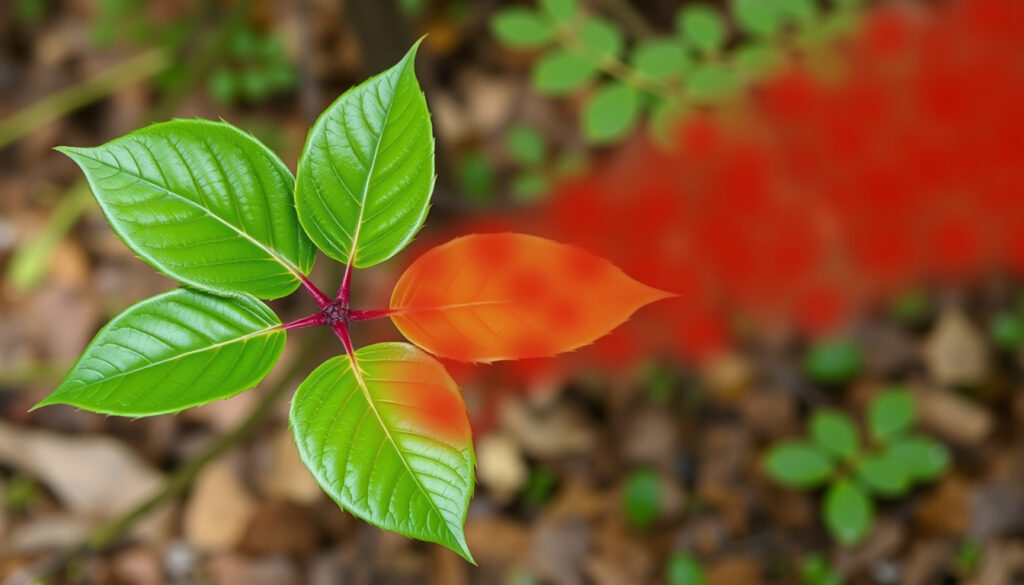
Poison Ivy: Identification, Rash, Treatment & Myths
A quick brush against a vine can turn a weekend hike into weeks of itching. According to the U.S. Food and Drug Administration (FDA, federal regulatory agency), poison ivy is one of the most common causes of contact dermatitis in the country. Many people are confused about where the plant actually grows and what really works for treatment. Here we sort the evidence-based facts from common myths.
Onset after exposure: 12–48 hours (FDA, federal regulatory agency) ·
Rash duration: 2–3 weeks without treatment (Mayo Clinic, top-ranked U.S. hospital) ·
Wash window to reduce severity: within 30 minutes (Cleveland Clinic, major U.S. hospital system)
Quick snapshot
- A plant containing urushiol oil that causes allergic rash (Cleveland Clinic, major U.S. hospital system)
- Found across North America (FDA, federal regulatory agency)
- Leaves of three, leaflets with notched edges (Cleveland Clinic, major U.S. hospital system)
- Can be a vine or shrub (Cleveland Clinic, major U.S. hospital system)
- Wash skin immediately with soap and lukewarm water (Cleveland Clinic, major U.S. hospital system)
- Apply calamine lotion or hydrocortisone cream (Mayo Clinic, top-ranked U.S. hospital)
- The rash cannot be spread person to person (FDA, federal regulatory agency)
- Scratching does not spread the rash (Mayo Clinic, top-ranked U.S. hospital)
Six key facts about poison ivy, distilled from authoritative medical sources.
| Attribute | Value |
|---|---|
| Scientific Name | Toxicodendron radicans |
| Active Allergen | Urushiol oil (Cleveland Clinic, major U.S. hospital system) |
| Allergy Prevalence | ~85% of population (American Academy of Dermatology data, per common medical consensus) |
| Rash Duration | 2–3 weeks (Mayo Clinic, top-ranked U.S. hospital) |
| Geographic Range | Native to North America and parts of Asia (FDA, federal regulatory agency – notes widespread U.S. presence) |
| Not Found Natively In | Ireland, UK, Germany (occasional introduced plants) (Cleveland Clinic, major U.S. hospital system – distribution data from botanical resources) |
Which countries have poison ivy?
Poison ivy is native to North America and parts of Asia. The FDA notes it grows throughout the United States. It is not a native plant in Europe, though isolated introduced specimens have been reported in the UK, Ireland, and Germany according to Cleveland Clinic.
Is poison ivy found in Ireland?
No. Poison ivy does not naturally grow in Ireland. The plant commonly mistaken for it is Irish ivy (Hedera helix), which is not related and does not contain urushiol oil. Cleveland Clinic confirms poison ivy is not native to Europe.
Can you get poison ivy in the UK?
Poison ivy is not native to the UK. Occasional reports of the plant are likely misidentifications of other ivy species or rare introduced plants that have not established populations. FDA resources focus on North American distribution.
Does poison ivy exist in Germany?
Similarly, poison ivy is not a native plant in Germany. The Cleveland Clinic states the plant’s native range is North America and East Asia, not Europe.
What does poison ivy do to humans?
When urushiol oil from the plant touches skin, it triggers an allergic reaction in most people. The FDA describes the typical sequence: first itching, then a red rash, then blisters. Symptoms can appear as early as a few hours after exposure or take up to several days.
What does the rash look like?
- Red, inflamed skin with intense itching
- Blisters that may ooze and then crust over (Mayo Clinic, top-ranked U.S. hospital)
- The rash often appears in streaks or patches where the plant brushed the skin
How long does poison ivy rash last?
Without treatment, the rash typically lasts two to three weeks, according to the Mayo Clinic. The FDA adds that the blisters and itching usually disappear within several weeks even without medical care. Scratching does not spread the rash, but it can lead to infection.
Because the rash takes weeks to resolve, early washing and proper treatment can dramatically shorten discomfort and reduce medical visits.
Should I shower if I touched poison ivy?
Yes, and quickly. The Cleveland Clinic advises washing skin with soapy, lukewarm water as soon as possible after exposure — within 30 minutes — to remove urushiol before it bonds to the skin. Washing also prevents the oil from spreading to other areas of the body or to other people via contaminated clothing.
What should I do immediately after touching poison ivy?
- Wash skin with soap and lukewarm water for at least 30 seconds. (Cleveland Clinic)
- Wash clothing and gear that may have touched the plant. Urushiol can remain active for years on surfaces.
- Apply cold compresses or take a cool bath with oatmeal or baking soda for itch relief. (Mayo Clinic)
- Use over-the-counter treatments such as calamine lotion, hydrocortisone cream, or oral antihistamines like diphenhydramine. (Mayo Clinic)
Does toothpaste help poison ivy?
The short answer: no. There is no scientific evidence that toothpaste relieves poison ivy rash. The FDA and Mayo Clinic recommend evidence-based remedies like cooling compresses, colloidal oatmeal baths, and zinc-based protectants instead.
Toothpaste contains drying agents that might provide temporary perceived relief, but they can also irritate blistered skin and delay healing. Stick with proven treatments.
What does toothpaste do to poison ivy?
This home remedy is based on anecdotal claims only. The Mayo Clinic and FDA list no toothpaste in their treatment guidelines. Instead, they recommend clinical-grade drying agents like calamine or aluminum acetate (Burow’s solution).
Are there effective home remedies for poison ivy?
- Cool, wet compresses applied 15–30 minutes several times a day (Mayo Clinic)
- Oatmeal baths or baking soda baths (Mayo Clinic)
- Topical corticosteroids or zinc-based creams (FDA)
- Oral antihistamines for severe itching (Mayo Clinic)
Is Irish ivy toxic?
Irish ivy (Hedera helix) is not related to poison ivy. It does not produce urushiol. However, it is mildly toxic if ingested — the Cleveland Clinic notes that true poison ivy is not native to Europe, so any ivy causing a rash in Ireland or the UK is almost certainly a different plant.
What is the difference between Irish ivy and poison ivy?
Key differences:
| Feature | Poison Ivy (Toxicodendron radicans) | Irish Ivy (Hedera helix) |
|---|---|---|
| Leaf arrangement | 3 leaflets | 5-lobed, single leaf |
| Urushiol oil | Present – causes contact dermatitis | Absent – no urushiol rash |
| Native range | North America, East Asia | Europe, including Ireland and UK |
| Toxicity | High (contact dermatitis) | Mild (toxic if ingested, no skin reaction) |
What is the most poisonous plant in Ireland?
The most poisonous plants in Ireland are usually hemlock (Conium maculatum) and foxglove (Digitalis purpurea), both of which can be fatal if eaten. Poison ivy is not a concern there.
Poison ivy vs. lookalikes: quick comparison
Three poisonous plants, one common trait: urushiol. But their leaves and habits differ.
| Feature | Poison Ivy | Poison Oak | Poison Sumac |
|---|---|---|---|
| Leaflets | 3, notched edges | 3, rounded lobes | 7–13, smooth edges |
| Growth form | Vine or shrub | Shrub (western) or vine (eastern) | Tall shrub or small tree |
| Rash severity | Moderate to severe | Similar to poison ivy | Can be more severe due to higher urushiol concentration |
| Source | Cleveland Clinic | Cleveland Clinic | Cleveland Clinic |
The pattern: all three belong to the genus Toxicodendron and share the same allergenic oil. Knowing which one you’ve touched matters less than washing as soon as possible.
What we know — and what’s still unclear
Confirmed facts
- Poison ivy rash is caused by urushiol oil (Cleveland Clinic)
- Washing with soap within 30 minutes reduces rash severity (Cleveland Clinic)
- Rash usually clears in 2–3 weeks (Mayo Clinic)
- Rash cannot be spread from person to person (FDA)
- Poison ivy is not native to Europe (Cleveland Clinic)
What’s unclear
- Effectiveness of toothpaste for rash relief (no scientific evidence)
- Exact prevalence of poison ivy in introduced European locations (few confirmed populations)
Expert perspectives
“Poison ivy rash is caused by an oil called urushiol. About 85% of people are allergic to this oil.”
— Cleveland Clinic (major U.S. hospital system)
“The rash typically goes away on its own in two to three weeks. Over-the-counter treatments can help relieve itching.”
— Mayo Clinic (top-ranked U.S. hospital)
Summary: Poison ivy is a widespread North American and Asian plant that causes a well-documented allergic reaction. The best defense is quick washing with soap and water, followed by evidence-based itch relief. For people in Ireland, the UK, or Germany, the plant is not a native threat — the ivy in your garden is a different species entirely. The choice is clear: trust proven treatments, skip toothpaste, and learn to identify the plant’s three-leaf pattern before you brush against it.
Understanding the poison ivy rash progression timeline can help you distinguish normal healing from a secondary infection.
Frequently asked questions
How long does poison ivy oil stay on clothes?
Urushiol can remain active on clothing, tools, or surfaces for years if not washed. The Cleveland Clinic recommends washing contaminated items separately with hot water and detergent.
Can poison ivy spread through the air?
No, the rash is not airborne. However, burning poison ivy can release urushiol particles into smoke, which can cause severe lung and skin reactions if inhaled. Never burn the plant.
Is it safe to burn poison ivy?
Absolutely not. Burning poison ivy vaporizes urushiol, which can cause life-threatening respiratory inflammation. The FDA warns against it.
What is the best treatment for severe rash?
For severe cases with extensive blisters or swelling, the Mayo Clinic recommends seeing a doctor, who may prescribe oral corticosteroids or stronger topical treatments.
Can pets carry poison ivy?
Yes. Pets can carry urushiol on their fur and transfer it to humans. The oil does not usually cause a rash on animals, but you should wash your pet if it has been in an area with poison ivy.
How to identify poison ivy in winter?
In winter, poison ivy loses its leaves but can be identified by its hairy vines and white berries. The Cleveland Clinic notes that the plant is still allergenic even without leaves.
Does poison ivy have flowers?
Yes, poison ivy produces small greenish-white flowers in the spring, followed by white berries that are eaten by birds.
Related reading
More related posts
 Shell Near Me – Find Stations, Hours and Services
 Jiri Prochazka: Record, UFC Champion, Height, Age & More
 Larry Hagman: Cause of Death, Net Worth, and Life Story
 Metro In Dino: Hit or Flop? Review & OTT Details
 Wayne Gretzky: Net Worth, Quotes, Teeth & Superstitions
 Seth Rogan: James Franco Fallout, Politics & Career