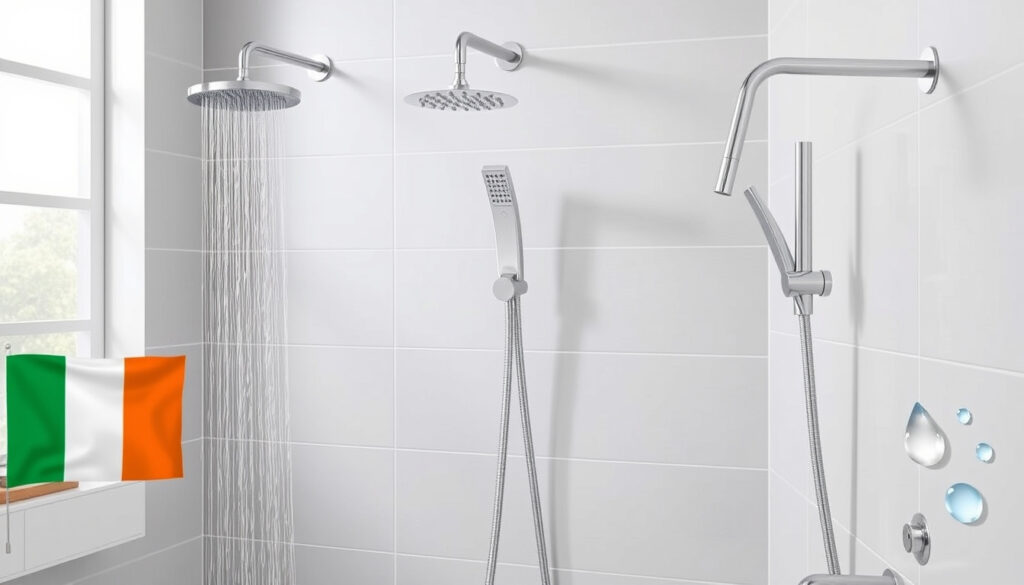
Shower Head Guide: Compatibility, Types, and Tips for Ireland
Standing under a lukewarm trickle while the shower head sprays in every direction except where you want it — that’s a classic cue it’s time for a change. Whether you are replacing an old fitting or upgrading to something better, the choices can feel overwhelming. But with a bit of know-how about Irish plumbing standards and water pressure, you can pick a shower head that delivers a genuinely satisfying rinse.
Standard connection thread: 1/2 inch BSP · Common types: 4 (rain, handheld, fixed, dual) · Minimum water pressure for rain shower heads: 1 bar · Average lifespan: 5–10 years
Quick snapshot
- Shower heads use a standard 1/2-inch BSP thread (Delta Faucet, manufacturer)
- Most replacement heads are DIY-friendly (Lowe’s, home improvement retailer)
- Adapters exist for non-standard connections (The Shower Head Store, specialist retailer)
- Whether a specific shower head will fit a particular shower arm without an adapter (Hansgrohe, bathroom fittings expert)
- Exact pressure performance before installation due to variations in home plumbing (Which?, UK/Ireland consumer tests)
- No upcoming regulatory changes that affect shower head compatibility in Ireland (NSAI, Irish standards body)
- Test your water pressure with a simple gauge before buying a rain or high-pressure model (Irish Water, utility regulator)
| Label | Value |
|---|---|
| Standard Thread Size | 1/2 inch BSP (British Standard Pipe) (BSI, British Standards Institution) |
| Common Types | Rain, Handheld, Fixed, Dual |
| Typical Flow Rate | 8–12 litres per minute (varies by model) (U.S. Department of Energy, water efficiency standards) |
| Replacement Difficulty | Easy – no specialist tools needed (Lowe’s, home improvement retailer) |
| Lifespan | 5–10 years depending on water quality and maintenance (Buildmat, building supplies retailer) |
The compatibility pattern is clear: the thread is standard, but pressure separates good showers from disappointing ones.
Do all shower heads fit any shower?
Understanding shower head connection standards
- Nearly all shower heads sold in Ireland use the same connection: a 1/2-inch BSP (British Standard Pipe) thread. That’s the same standard used across the UK and much of Europe. As Delta Faucet, bathroom fixture manufacturer puts it, many heads are “designed to fit a standard shower arm with 1/2-inch outer diameter and male threads.” That means you can swap most brands without changing your shower arm.
Thread sizes and compatibility
- The industry standard is consistent: 1/2-inch NPT in the US, 1/2-inch BSP in Ireland and UK. According to The Shower Head Store, specialist retailer, “any compatible shower head should screw onto a U.S. shower arm without special adapters if it uses the standard 1/2-inch pipe thread.” The same logic applies in Ireland, but always check the thread type on your existing arm. High Sierra Showerheads, manufacturer confirms: “most shower heads are designed to fit the industry-standard 1/2-inch threading for compatibility with the vast majority of shower arms.”
When adapters are needed
- Some imported heads may use metric threads or require a longer arm. Hansgrohe, bathroom fittings expert advises buyers to check connection sizes before purchasing a matching shower hose. If your shower arm is older than 15 years or has a custom fitting, a simple brass adapter from your local hardware shop usually bridges the gap.
The implication: Thread standards are so universal that the real question Irish buyers face is whether their home’s water pressure can support the style they want.
What is the best shower head to purchase?
Top-rated shower heads in Ireland
- Irish retailers such as Tapron Ireland recommend choosing for “aesthetics, functionality, and water efficiency.” Tapron Ireland, Irish plumbing retailer guides customers to match the shower head to their water system — gravity-fed (low pressure) or mains-fed (high pressure). Which?, UK/Ireland consumer tests routinely tests models from brands like Triton and Mira, and the top scorers combine good spray coverage with ease of cleaning.
Best for low water pressure
- High Sierra Showerheads, manufacturer points out: “low water pressure calls for a smaller or medium-sized head, while high pressure can support a larger head.” For Irish homes on a gravity-fed system, a handheld or small fixed head with a flow-restrictor removed can make a big difference.
Best for rain shower experience
- Rain shower heads deliver a drenching feel, but they need at least 1 bar of pressure. Consumer Reports, product testing organisation notes that large rain heads (250 mm+) can struggle with low flow rates. If your home runs on mains pressure, a rain head is a solid luxury upgrade.
The pattern: The best shower head for an Irish home is the one that matches the water system already in place, not the one that looks most impressive on the shelf.
Which type of shower head is best?
Fixed shower heads
- Buildmat, building supplies retailer says fixed shower heads “suit a clean, minimal look.” They are affordable, reliable, and ideal for simple replacement. Their only limitation is adjustability — you can’t move the spray direction.
Handheld shower heads
- Handheld models offer flexibility: rinsing children, cleaning the shower tray, or targeting specific areas. Lowe’s, home improvement retailer recommends handhelds for families because of this versatility. They work well with both low and high pressure.
Rain shower heads
- Rain shower heads are larger (typically 200–300 mm diameter) and mounted overhead. The Shower Head Store, specialist retailer lists them as offering “a luxurious feel,” but warns they require sufficient water pressure to perform well.
Dual shower heads
- Dual systems combine a fixed overhead head with a handheld unit on a slide bar. Buildmat, building supplies retailer notes that “twin shower setups combine a fixed head and a handheld option” — ideal for households where one person wants rain and the other prefers targeted rinsing.
What this means: The type of shower head you pick says more about your household’s habits than about the hardware — fixed suits minimalists, handheld helps busy families, and dual covers all bases at a higher price.
Which shower head has the strongest pressure?
High-pressure shower heads: how they work
- High-pressure heads don’t increase flow; they concentrate it. These models restrict the opening to boost velocity, creating a more forceful spray. High Sierra Showerheads, manufacturer explains that a smaller head diameter often delivers higher pressure per square inch.
Best high-pressure models
- Brands like Triton and Mira offer dedicated “high pressure” ranges. Which?, UK/Ireland consumer tests tests show that the best performers achieve a strong spray without exceeding standard flow rates. Look for models with adjustable spray patterns — a narrower setting increases force.
What to avoid when seeking pressure
- Beware of water-saving heads that use aerators. While they reduce consumption, they can soften the spray. U.S. Department of Energy, water efficiency standards notes that some flow restrictors cut output to 6 litres per minute — fine for the environment, frustrating for a powerful rinse.
The catch: Maximum pressure comes from smart engineering, not brute flow — a smaller head with a tight spray pattern beats a big rain head every time on gravity-fed systems.
Can I just replace my shower head?
Step-by-step replacement guide
- Turn off the water supply at the isolation valve or main stopcock.
- Unscrew the old shower head by hand (use a cloth if it’s stuck).
- Clean the threads of the shower arm with a rag.
- Wrap PTFE tape clockwise around the threads 2–3 times.
- Screw on the new shower head by hand until snug.
- Turn the water back on and check for leaks.
Tools needed
- PTFE tape (often called plumber’s tape) — costs about €2.
- Adjustable spanner (only if the nut is too tight).
- Cloth or rubber grip for removing stubborn heads.
Common mistakes to avoid
- Forgetting to apply PTFE tape — leads to drips.
- Overtightening — can crack the fixture or strip threads.
- Not checking the thread direction (standard is clockwise).
What this means: A DIY replacement is straightforward enough that any homeowner can do it, but the small details — PTFE tape, hand-tightening — separate a leak-free job from a call to the plumber.
What to consider when buying a shower head?
Water pressure compatibility
- Know your system: gravity-fed (low pressure, typically 0.5–1.0 bar) or mains-fed (high pressure, 1.5–3.0 bar). Irish Water, utility regulator provides guidance on standard household pressures. Rain heads need at least 1 bar to work well.
Connection type and size
- Universal standard is 1/2-inch BSP. BSI, British Standards Institution specifies the thread dimensions. If your arm is unusually long or angled, check that the new head won’t hit the wall.
Material and durability
- Chrome and stainless steel resist corrosion best. Buildmat, building supplies retailer warns that “mineral buildup from hard water can clog nozzles over time.” Heads with rubber spray tips are easier to clean — just wipe them.
Spray patterns and settings
- Most models offer 3–5 spray settings: rain, massage, mist, and rinse. Delta Faucet, manufacturer suggests considering who uses the shower and personal spray preferences. A family with varied tastes may prefer a dial that cycles through patterns.
What this means: A smart buyer starts with the water system, not the product — pressure determines what works, material determines how long it lasts, and spray settings determine who in the household actually enjoys using it.
Four main types, and the choice comes down to pressure, space, and lifestyle. The table below lines them up side by side.
| Type | Best for | Water pressure needed | Installation |
|---|---|---|---|
| Fixed | Simple, clean look | Low to medium | Direct to arm |
| Handheld | Flexibility, families | Low to high | Hose + bracket |
| Rain | Luxurious drenching | 1 bar minimum | Overhead arm or ceiling |
| Dual | Combined overhead + handheld | Medium to high | Slide bar + diverter |
The pattern reveals that pressure requirements dictate what’s feasible — handheld units work everywhere, while rain heads lock out gravity-fed homes entirely.
Six specs, one pattern: the connection standard is universal, but pressure and material separate the winners from the duds.
| Spec | Details |
|---|---|
| Thread size | 1/2-inch BSP |
| Types | Rain, Handheld, Fixed, Dual |
| Flow rate | 8–12 l/min |
| Replacement | Easy, no specialist tools |
| Lifespan | 5–10 years |
| Common materials | Chrome, stainless steel, plastic |
| Spray settings | 3–5 typical |
| Minimum pressure (rain) | 1 bar |
| PTFE tape needed | Yes |
Every spec — except one — is negotiable: thread size is fixed, but everything else adjusts to your home’s plumbing reality.
Upsides
- Easy to replace — no plumber needed
- Wide range of styles and prices
- Standard thread fits most setups
- Can improve water pressure with the right model
Downsides
- Rain heads need higher pressure
- Hard water can clog nozzles
- Some models restrict flow too much
- Dual setups require extra space
An Irish homeowner on a gravity-fed system can still get a great shower by choosing a small handheld head — the trade-off is giving up the rain experience. For mains-fed homes, the world is your oyster, but watch out for flow restrictors.
Hard water is the silent killer of shower heads. If your area has limescale, prioritise models with rubber spray tips — they can be wiped clean in seconds, while fixed nozzles require soaking in vinegar.
How to replace a shower head — step by step
- Turn off the water supply at the isolation valve.
- Unscrew the old head counterclockwise.
- Clean the arm threads.
- Wrap PTFE tape clockwise 2–3 turns.
- Screw on the new head hand-tight.
- Turn water on and check for leaks.
The whole job takes about 10 minutes with just PTFE tape and your hands. Overtightening with a spanner is the most common mistake — it can crack the fixture. Hand-tight is plenty.
Confirmed facts vs what remains unclear
Confirmed facts
- Shower heads use a standard 1/2-inch BSP thread.
- Most replacement heads are DIY-friendly.
- Adapters exist for non-standard connections.
What’s unclear
- Whether a specific head will fit your arm without an adapter — test with a thread gauge.
- Exact pressure performance before installation — variations in home plumbing make guarantees tricky.
What the experts say
“In most homes, the standard shower arm is 1/2-inch outer diameter with male threads. A vast number of shower heads are designed to fit these dimensions, so compatibility is rarely an issue.”
— Delta Faucet, bathroom fixture manufacturer, technical guide
“The typical domestic water supply in Ireland operates at between 1.5 and 3.0 bar for mains-fed properties. Gravity-fed systems produce around 0.5 to 1.0 bar. Shower heads rated for low pressure are widely available and perform well in these conditions.”
— Irish Water, utility regulator, water supply guidance
“Replacing a shower head on a Triton electric shower is straightforward. You need to ensure the head is compatible with the shower’s flow and pressure rating. Most Triton models accept standard 1/2-inch BSP fittings.”
— Triton Showers, Irish manufacturer, product support
Related reading: Standing Desk Ireland: Best Electric Desks Compared
Frequently asked questions
How do I clean a shower head?
Soak it in white vinegar overnight to dissolve limescale, then scrub nozzles with an old toothbrush. For rubber tips, simply wipe them after each shower.
Can I use a shower head with a low-flow restrictor?
Yes — but expect a gentler spray. If you want more force, choose a head without a restrictor or remove it (check local regulations first).
What is the difference between a shower head and a hand shower?
A shower head is fixed to the wall or ceiling; a hand shower is detachable with a hose. Many setups include both.
Are shower heads with LED lights worth it?
They add a decorative element but don’t improve performance. Check the build quality — cheap LEDs can short after a few months.
Do I need a plumber to install a new shower head?
No. It’s a 10-minute DIY task with PTFE tape. A plumber is only needed if you are replacing the entire shower arm or installing a new shower system.
How do I know my water pressure type?
Look for a cold water tank in the attic — that signals a gravity-fed system. If there’s no tank, you likely have mains pressure. A plumber’s pressure gauge gives an exact reading.
What is the most durable material for a shower head?
Chrome-plated brass or stainless steel offer the longest life. Plastic heads are cheap but prone to cracking and UV degradation.
For Irish households, the choice of shower head comes down to one dominant factor: water pressure. Mains-fed homes can enjoy any style, while gravity-fed systems demand a smaller, pressure-focused head. The standard 1/2-inch BSP thread means compatibility is rarely a roadblock, and replacement takes minutes. For the gravity-fed homeowner in Dublin or Cork, the clear move is a handheld or compact fixed head — anything else risks a weak spray that no one looks forward to.
More related posts
 Simone Ashley: Partner, Real Name, Age & Ethnicity
 TYMO Hair Curler Review: Performance, Trust & Value for Ireland
 Mel McLaughlin: Lung Cancer, Sister’s Death, and Family
 Hooligan Hefs: Real Name, Tour Dates & Facts
 Anne Hathaway Sobriety & Inshallah Controversy Facts
 Ring Gold Karat Guide: 10K, 14K, 18K, 22K & 24K Compared
 Cheryl Hines: From Curb to Campaign Life
 Kate Walsh: Health, Relationships, and Career Guide